Kitchen Design Ideas for Nepali Homes: Layouts, Materials, and 2026 Costs
Planning a new kitchen in Nepal comes down to three decisions. What layout fits your space. What materials will survive the monsoon and daily dal-bhat cooking. And how much all of it costs. Get those right and the rest follows.
Here is the short version. A simple, well-built kitchen for a small flat can be done for around NPR 1.5 to 3 lakh. A mid-range modular kitchen for a family home in the Kathmandu Valley usually lands between NPR 3 and 6 lakh, and often higher once you add appliances. Premium kitchens with imported fittings run past NPR 10 lakh. These are 2026 Kathmandu Valley figures, and prices move with the exchange rate and material costs, so treat them as planning ranges, not fixed quotes.
This guide walks through the main layouts used in Nepali homes and the material choices that actually matter. It ends with a realistic cost breakdown, so you can budget before you talk to a single carpenter or showroom.
Quick answer: kitchen design in Nepal at a glance
- Best layout for most homes: L-shaped. It suits typical Kathmandu apartment and house kitchens and uses space efficiently.
- Modular vs traditional: Modular is faster to install and easier to clean. A skilled carpenter using the right materials can match it for less, if you supervise the work.
- Carcass material: BWP (boiling water proof) marine plywood. It handles Nepal’s humidity and cooking steam far better than MDF or particle board.
- Countertop: Quartz is the practical pick. It resists turmeric and oil stains and needs no sealing. Granite costs a little less but stains over time.
- Budget range (2026): NPR 1.5 to 3 lakh basic, NPR 3 to 6 lakh mid-range, NPR 6 to 12 lakh and up for premium. Figures from Nepal interior firms Reshape Home and House Design in Nepal.
What kitchen layout works best in Nepali homes?
The layout is the skeleton of the kitchen. It decides how you move between the stove, the sink, and the fridge, and how much counter and storage you get. Nepali homes come in every shape, from narrow flats in Baneshwor to wide houses in Bhaisepati, so no single layout wins everywhere. Here are the four that show up most often.
Straight-line (single-wall) kitchen

Everything sits along one wall. The sink, the hob, and the storage all run in a line. This is the cheapest layout and the easiest to build because it uses the least cabinetry.
It suits studio flats, rental units, and small apartments where floor space is tight. The downside is limited counter room. If two people cook together often, a single wall gets crowded fast. As of 2026, a straight kitchen typically costs NPR 1.5 to 3 lakh depending on materials.
L-shaped kitchen

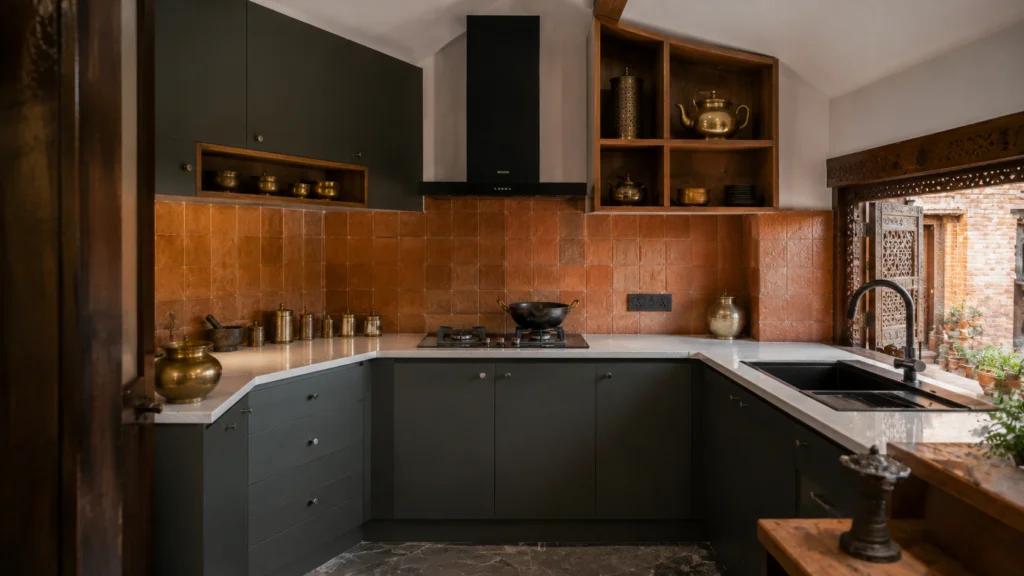
Cabinets run along two walls that meet in a corner. This is the most popular layout in Nepal, and for good reason. It gives you a natural work triangle between sink, stove, and fridge. It also frees up the rest of the room, which matters in homes where the kitchen opens into a dining area.
An L-shaped kitchen usually costs NPR 3 to 6 lakh. The one weak spot is the corner cabinet, which can become dead space. A “magic corner” pull-out fitting fixes that, and it is worth the small extra cost.
U-shaped kitchen

Three walls of cabinets wrap around you. This layout gives the most storage and counter space, so it fits larger homes and serious home cooks. It needs room, though. A comfortable U-shape wants a footprint of at least about 2.4m by 2.4m.
It costs more because it uses more material and labor, generally NPR 5 to 10 lakh and up. If your kitchen is small, forcing a U-shape makes it feel cramped.
Island and parallel kitchens

An island kitchen adds a freestanding counter in the middle, used for prep, casual dining, or extra storage. It looks great and works well in open-plan homes, but it needs a large kitchen and it is the priciest option, often NPR 8 to 15 lakh and above. A parallel (galley) kitchen runs cabinets along two facing walls and is practical for long, narrow rooms, though it uses a fair amount of material.
For most Kathmandu Valley families, the honest recommendation is L-shaped, with a small breakfast bar or peninsula if the room allows it. The breakfast bar is the single most requested add-on because it gives you extra counter space and a casual place to sit.
Modular vs traditional kitchen: which should you choose?

This is the choice that confuses most people, so let us be clear about what the words mean.
A modular kitchen is built from factory-made cabinet boxes cut to precise sizes, sealed on all edges, and assembled on site with branded hardware. A traditional (carpenter) kitchen is built on site from scratch by a carpenter, cut and fitted to your exact walls.
The common belief is that modular is expensive and carpenter is cheap, so you go carpenter unless you have money to spare. That framing is misleading. The real gap between a good carpenter kitchen and an entry modular kitchen is smaller than most people expect.
A local carpenter kitchen in Kathmandu typically runs NPR 3.25 to 5 lakh. A complete standard modular kitchen with appliances starts around NPR 4.3 lakh. So the price difference at the entry level is modest.
What actually separates them is consistency and fittings. Modular systems come with catalog items like magic corners, pull-out pantry towers, and deep drawers that you simply point at and order. A carpenter can build all of these too. But only if they source the parts correctly and you check the work.
Choose modular when your kitchen has standard dimensions, you want specialist fittings without fuss, and you cannot supervise the build closely. The factory does the quality control.
Choose a skilled carpenter in a few cases. When your home has odd dimensions, which is common in older houses in Patan, Bhaktapur, and Kirtipur. When your budget is firmly below NPR 3.5 lakh. Or when you have a proven carpenter whose past work you have seen and liked after a few years. A carpenter builds to your exact walls without the custom surcharge a modular company would add.
One rule holds either way. A modular label means nothing if the materials are wrong. Plenty of “modular” kitchens in Kathmandu are just carpenter work with a shiny acrylic front and a cheap carcass hidden behind it. Ask what is inside the box, not just what the door looks like.
Which materials matter most for a kitchen in Nepal?
Nepal’s climate is hard on kitchens. Five months of monsoon humidity, daily steam from the pressure cooker, and turmeric that stains anything porous. The materials you cannot see often matter more than the ones you can.
Carcass (the cabinet box)
This is the internal structure behind the doors. Nobody sees it, and it is the most important material choice you make.
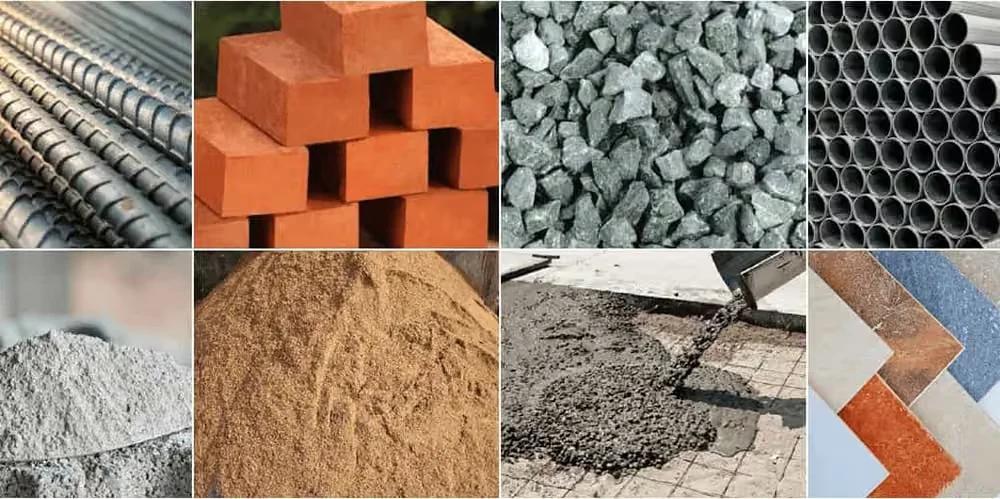
Use BWP marine plywood at 18mm thickness, ISI certified where possible. It resists moisture, which is exactly what a Nepali kitchen throws at it. You can buy it from established timber yards in areas like Teku and Kalimati.
Avoid MDF and particle board for the carcass. They soak up moisture and swell. In Nepal’s long monsoon, an MDF box under the sink can start swelling within two or three seasons. Once it swells, doors go out of alignment and hinges wear out faster. The failure is slow and hidden until it is expensive.
Edge banding
Every cut edge of plywood should be sealed with a thin PVC or ABS strip. Factory modular cabinets are banded on all four sides of every panel. Carpenter kitchens sometimes skip the internal shelves and cabinet backs to save time. Those open edges drink in humidity and delaminate from the inside. If you go the carpenter route, insist that every edge is banded, including the ones you will never see.
Hardware (hinges and drawer channels)
This is the best value-for-money decision in the whole kitchen. Branded soft-close hinges and full-extension drawer channels, such as Hettich or Ebco, keep working smoothly for years. Local copies look identical on day one but often start sagging and sticking within 12 to 18 months.
The price gap is small. A branded hinge runs roughly NPR 350 to 550, versus NPR 80 to 150 for a local copy, per House Design in Nepal. Across a full kitchen of around 40 hinges, upgrading costs somewhere near NPR 11,000 to 17,000. Put the brand name in your contract in writing. “Soft-close hardware” with no brand means whatever the contractor has lying around.
Countertop
Your countertop takes daily abuse, so pick for function first.
Quartz is the practical choice. It is non-porous, so turmeric, curry oil, and hot tea wipe off without staining. It needs no sealing. A 10-foot quartz section starts around NPR 47,000 in Kathmandu. Granite costs a little less but has tiny pores. They absorb turmeric within minutes if you do not wipe up right away. Granite also needs annual sealing that most people skip. Stainless steel never stains and shrugs off heat, which is why a small stainless prep section next to the hob is a smart addition for heavy Nepali cooking.
Kitchen design cost in Nepal: a full breakdown
Here is how the numbers stack up as of 2026, drawn from Nepal interior firms. Treat these as ranges. Your final figure depends on size, materials, fittings, and the vendor you pick.
By quality tier
| Tier | Total cost (2026) | What you get |
|---|---|---|
| Basic | NPR 1.5 to 3 lakh | Simple design, laminate finish, standard fittings, small space |
| Mid-range | NPR 3 to 6 lakh | Plywood or HDHMR panels, granite or quartz top, soft-close drawers |
| Premium | NPR 6 to 12 lakh and up | Quartz counters, imported fittings, custom design, luxury finishes |
Source: Reshape Home, 2026.
By layout
| Layout | Typical cost (2026) | Best for |
|---|---|---|
| Straight-line | NPR 1.5 to 3 lakh | Small flats, rentals |
| L-shaped | NPR 3 to 6 lakh | Most Nepali homes |
| U-shaped | NPR 5 to 10 lakh and up | Larger homes, keen cooks |
| Island | NPR 8 to 15 lakh and up | Open-plan luxury homes |
Source: Reshape Home, 2026.
Per square foot
Reshape Home lists per-square-foot rates of roughly NPR 1,200 to 1,800 for basic, NPR 1,800 to 2,800 for mid-range, and NPR 2,800 to 5,000 and up for premium. These help you sanity-check a quote against your kitchen’s size.
Costs people forget
The cabinet quote is not the whole bill. Budget for these too:
- Plumbing and electrical changes: moving the sink or adding sockets adds up.
- Chimney and ducting: a ducted chimney that vents outside works far better than a recirculating one. If your building has no duct shaft, the ductwork alone can add NPR 8,000 to 18,000.
- Appliances: fridge, hob, chimney, microwave, and an under-sink RO unit are often quoted separately.
- Transport and installation: labor for skilled workers runs around NPR 500 to 800 per day, with installation often NPR 20,000 to 50,000 or more.
Together these extras can add anywhere from NPR 20,000 to over NPR 1 lakh, so leave room in your budget.
Smart kitchen design ideas for Nepali homes
Cost aside, a few design choices make daily cooking easier in a Nepali kitchen.
Add a magic corner to any L or U-shaped kitchen so the corner cabinet stops being wasted space. Choose deep pull-out drawers over fixed shelves in base cabinets, since they let you reach heavy pressure cookers, kadais, and tawas without bending and digging. Fit a pantry pull-out tower for floor-to-ceiling storage where every jar and spice is visible from the front.
Plan your chimney over the hob as ducted, not recirculating, because Nepali cooking produces a lot of steam and grease. Lay the backsplash tile before the cabinets go in for a clean finish, and follow the right sequence: waterproofing, then tiling, then cabinets, then countertop, then sink and appliances. Add under-cabinet LED lighting so you can actually see your prep surface after dark.
If your kitchen is small, borrow the space-saving ideas from small-apartment interiors: vertical storage, light colors, and multi-use surfaces. And if you follow Vastu, plan the stove and sink positions early, since retrofitting them later is expensive.
For deeper planning, these related Basobaas guides help: House Construction Cost in Nepal, Small Apartment Interior Design Ideas for Nepali Homes, Best Building Materials for Homes in Nepal, and the Complete Vastu Guide for Your Home in Nepal.
How long does a kitchen take to build in Nepal?
For a carpenter kitchen, the on-site work usually takes a couple of weeks depending on complexity. For modular, factory manufacturing runs about 3 to 6 weeks after the site is measured. On-site installation of a standard L-shape then takes roughly 5 to 7 days once tiling is done. From first visit to a finished modular kitchen, plan for about 7 to 10 weeks. The most common cause of delay is waiting on imported appliances like chimneys and built-in ovens, so order those early.
Frequently asked questions
How much does a modular kitchen cost in Nepal in 2026?
A complete modular kitchen in Nepal generally runs from around NPR 4.3 lakh for a standard build up to NPR 20 lakh and more for luxury, according to House Design in Nepal. Mid-range kitchens, the most popular tier, often land between NPR 6 and 12 lakh once appliances, electrical, and plumbing are included. Prices vary by size, materials, and vendor.
Is a modular kitchen better than a carpenter kitchen in Nepal?
Not always. For standard-sized kitchens and daily Nepali cooking, a true modular kitchen with marine ply and branded hardware gives consistent quality and easy fittings. For odd-shaped rooms in older homes, or budgets below NPR 3.5 lakh, a skilled carpenter using the right materials is often the better value. The materials and hardware matter more than the label.
What is the best plywood for kitchen cabinets in Nepal?
BWP (boiling water proof) marine plywood at 18mm, ISI certified where possible. It resists Nepal’s monsoon humidity and cooking steam. MDF and particle board absorb moisture and tend to swell and fail within a few years in these conditions.
Is quartz or granite better for a kitchen countertop in Nepal?
Quartz is usually the better pick. It is non-porous, so turmeric and oil do not soak in, and it needs no sealing. Granite costs a little less but has pores that stain over time and needs regular sealing that most households skip. If budget is tight, use quartz on the main counter and something cheaper on a secondary surface.
What is the cheapest kitchen layout in Nepal?
The straight-line, or single-wall, layout. Everything sits along one wall, so it uses the least cabinetry and labor. It typically costs NPR 1.5 to 3 lakh and suits small flats and rentals. The trade-off is limited counter space.
How do I avoid a bad kitchen contractor in Nepal?
Ask specific questions before you sign. Is the carcass factory-cut or site-cut? What grade of plywood? Which brand of hinges and drawer channels? Ask to see the plywood sheet with its grade stamp before it enters your home. Get the hardware brand written into the contract. And ask for references you can actually call and visit.
Planning your kitchen
A good kitchen in Nepal is not about the most expensive finish. It is about the right layout for your space, materials that survive the climate, and hardware that keeps working. Decide your layout first, spend on the carcass and hinges even if you save elsewhere, and get every material specified in writing before work starts.
Maybe you are still choosing a home, or weighing a renovation before you move in. Browse current houses and apartments on Basobaas to see what layouts and kitchen sizes come with different properties. Planning the kitchen before you buy can save you a costly rebuild later.
Cost figures in this article are 2026 estimates from Nepal interior firms. Prices change with materials and exchange rates, so confirm current rates with local vendors before budgeting.
Latest Posts
Fresh reads from Basobaas