Small Apartment Interior Design Ideas for Nepali Homes
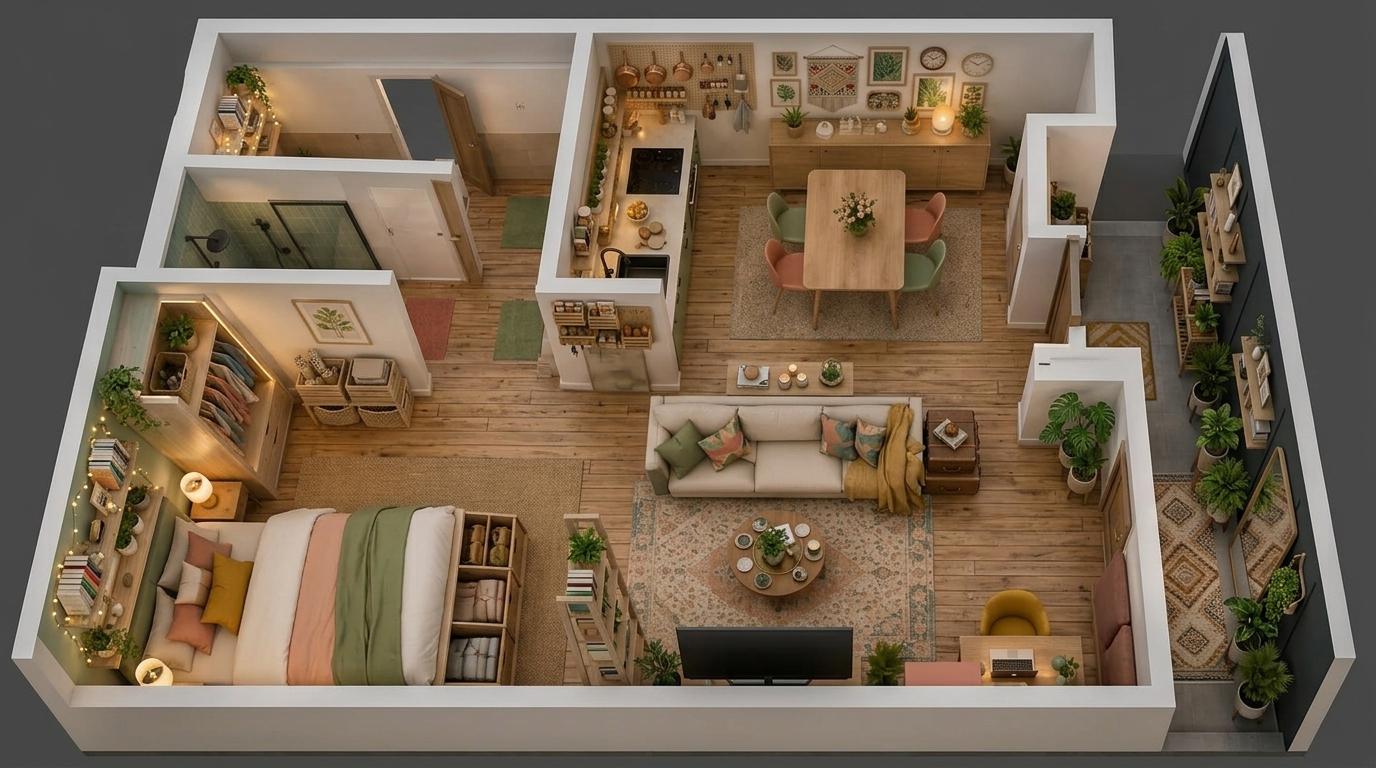
Most flats in Kathmandu are smaller than people expect. A 1BHK often sits around 400 to 500 square feet, and a 2BHK usually runs between 500 and 800 square feet. That is not a lot of floor space once you add a bed, a sofa, a dining table, and a shoe rack by the door.
The good news is that small does not have to feel cramped. With the right layout, a bit of vertical thinking, and furniture that pulls double duty, a compact Kathmandu flat can feel open, calm, and genuinely yours.
This guide is built for real Nepali apartments. Think tight kitchens, one balcony, load-shedding memories that still shape how we wire a home, and the daily reality of dust and monsoon damp. Below you will find practical small apartment interior ideas, honest cost ranges in NPR, and a room-by-room plan you can actually follow.
Quick answer: how to make a small Nepali apartment feel bigger
Use vertical space, pick multi-use furniture, and keep the color palette light. Those three moves do most of the work.
In short:
- Go up, not out. Tall shelves and wall cabinets free the floor.
- Choose furniture that stores or folds, like a bed with drawers or a foldable dining table.
- Stick to light walls with one or two accent tones so the eye keeps moving.
- Let natural light in and add mirrors to bounce it around.
- Cut clutter with closed storage so surfaces stay clear.
A basic refresh of a small flat can start modestly if you do the light work yourself. A fuller fit-out with a designer and new furniture is a bigger number, and we break those ranges down further below.
Start with the layout, not the decor
Before you buy a single cushion, walk your flat and think about how you move through it. In a small space, circulation matters more than any single piece of furniture.
Keep clear walking paths of at least two feet wide between big items. If you have to turn sideways to pass the sofa, the layout is fighting you. Push large furniture against walls where you can. Float a piece in the middle of a room only when the room is big enough to carry it, which most Kathmandu flats are not.
Zone an open living-dining area with a rug or a low shelf instead of a wall. A single small rug under the sofa tells your eye where the living zone ends and the dining zone begins. You get separation without losing light or space.
One more Nepali-specific tip. Plan your entry. Many flats open straight into the living room with no foyer. A slim shoe cabinet and a few wall hooks near the door keep chappals and jackets from spilling into the room.
Think vertically: your walls are storage

Nepali flats often have decent ceiling height, sometimes 9 feet or more. That vertical space is free real estate, and most people waste it.
Run shelves up toward the ceiling for books, files, and things you use less often. Wall-mounted cabinets in the kitchen and above the toilet in the bathroom hold a lot without eating floor area. Floating shelves in the living room display a few plants or photos while keeping the surface below clear.
Hooks and pegboards work hard in tight spaces. A pegboard in the kitchen holds ladles and pans. Hooks behind the bedroom door hold bags and scarves. In a home this size, every vertical surface is a chance to store or display something.
If you rent and cannot drill freely, use tension rods, freestanding tall units, and adhesive hooks rated for weight. Talk to your landlord first. Our guide on renting a flat in Kathmandu covers what you can usually negotiate on fixtures and small modifications.
Furniture that does two jobs


In a small flat, single-purpose furniture is a luxury you cannot afford. Look for pieces that store, fold, or convert.
Here are the workhorses worth hunting for in Kathmandu furniture showrooms:
- A bed frame with built-in drawers or a lift-up storage base. This swallows bedding, off-season clothes, and suitcases.
- A sofa-cum-bed for the living room, useful when relatives visit from outside the valley.
- A foldable or extendable dining table that seats two on a normal day and six during a gathering.
- A storage ottoman that works as a seat, a footrest, and a box for blankets.
- Nesting side tables you can tuck away or spread out as needed.
- A wall-mounted or drop-leaf desk if you work from home.
Custom carpenters are common in Nepal and often cheaper than imported branded furniture for built-in pieces. A local mistri can build a storage bed or a wall unit sized exactly to your room. Get a written quote and agree on the wood or board grade before work starts. Our guide to hiring a contractor in Nepal has tips on vetting tradespeople and staging payments.
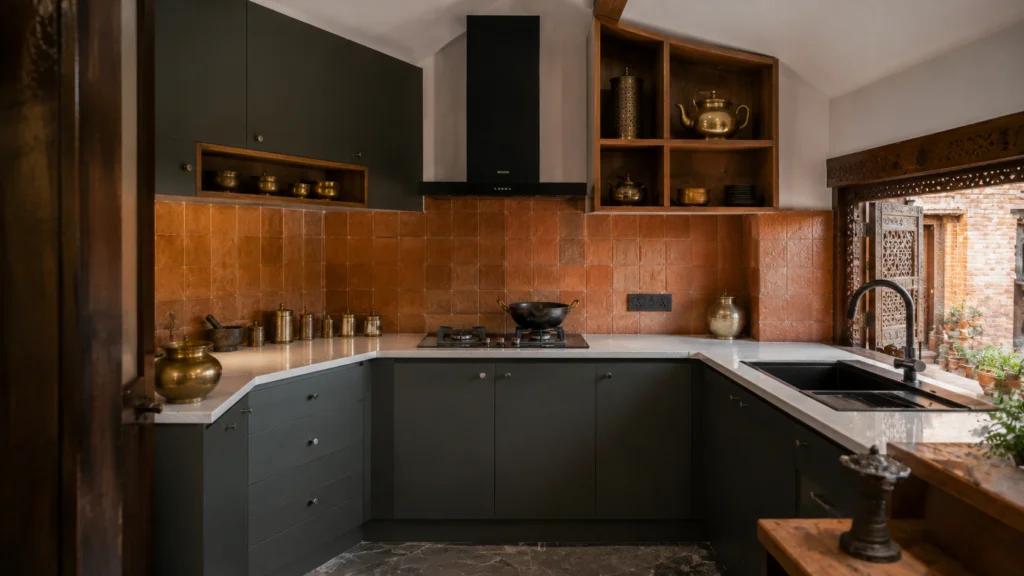
Small kitchen ideas that actually work


The kitchen is where small-flat frustration peaks. Nepali cooking uses a lot of vessels, spices, and gas, so storage and ventilation are not optional.
For compact flats, a straight-line (one-wall) kitchen is the natural fit. Sink, stove, and fridge sit along a single wall. A basic 8 to 10 foot modular setup in 18mm plywood with laminate typically runs about NPR 1,80,000 to NPR 2,20,000. Got a corner to use? An L-shaped modular kitchen of around 120 square feet usually costs between NPR 3,00,000 and NPR 4,00,000.
You do not need a full modular kitchen to gain storage. A few targeted moves help:
- Add tall wall cabinets up to the ceiling for rarely used pressure cookers and thali sets.
- Use a pegboard or rail for ladles, sauce pans, and cutting boards.
- Fit pull-out baskets or a slim trolley in the gap beside the fridge.
- Keep a magnetic strip for knives instead of a bulky block.
- Store daal, rice, and masala in stackable clear jars so you can see stock at a glance.
Do not skip ventilation. A small kitchen fills with steam and oil fast. A basic exhaust fan or chimney keeps grease off your cabinets and walls, which matters more in a compact space where everything sits close together.
Make one room work as many
In a 1BHK, a single room often has to be a bedroom, a study, and sometimes a living space. The trick is soft separation and flexible furniture.
Use a bookshelf or an open shelving unit as a room divider. It splits the space, adds storage on both sides, and still lets light pass through. A curtain on a ceiling track is a cheap, reversible way to hide the bed during the day.
If you work from home, a drop-leaf desk mounted to the wall folds flat when you are done. A dining table can double as a work surface if you keep a basket nearby for laptops and papers so it clears quickly at meal time.
Color, light, and the feeling of space
Color changes how big a room feels, and it costs almost nothing to get right.
Light walls make a room feel open. Whites, soft grays, warm off-whites, and pale earth tones reflect light and push the walls back visually. Save bold color for one accent wall or for cushions, curtains, and art that you can change later.
Natural light is your best tool. Keep windows as clear as you can. Use light, sheer curtains rather than heavy drapes when privacy allows. In flats that get little sun, or that face a neighbor’s wall a few feet away, mirrors help. Place a mirror across from a window or near a light source and it bounces brightness deeper into the room. It also tricks the eye into reading the space as larger.
Lighting layers matter too. One ceiling bulb flattens a room. Add a floor lamp or wall lights and the space gains depth and warmth in the evening. Warm LED bulbs use little power and last for years, which is a practical win given electricity costs.
Storage discipline: the habit that keeps it working


Even the best layout fails if surfaces pile up. In a small flat, clutter shows immediately because there is nowhere for the eye to rest.
Favor closed storage over open. Cabinets and drawers hide the mess that open shelves put on display. Give every category a home, whether that is a drawer for documents, a box for chargers, or a basket for the day’s newspapers. When something new comes in, something old should go out.
This is less about minimalism as a style and more about survival in a tight footprint. A 450 square foot flat simply cannot absorb the same volume of stuff as a family house in the hills, so a little discipline goes a long way.
Plants, texture, and personality

A small home should still feel like yours, not like a hotel room. You just have to add character without adding bulk.

Vertical gardens and hanging planters bring greenery without using floor space. Money plant, snake plant, and pothos are hardy choices that handle indoor light in Kathmandu flats. A few plants soften hard edges and improve how a room feels.
Texture adds warmth where you cannot add square footage. A woven dhaka cushion, a felt rug, or a wooden tray reads as personality without crowding the room. Nepali crafts, from a Bhaktapur pottery piece to a handwoven throw, give a flat local character that mass furniture never will. Keep decor pieces few and intentional. In a small space, three good objects beat ten small ones.
What it costs to do up a small flat in Nepal
Costs vary widely with materials, how much you build custom, and whether you hire a designer. Treat these as rough 2026 ranges, not fixed prices, since rates move.
If you are doing light work yourself, a refresh with paint, curtains, a few storage units, and decor can stay modest. The big numbers come from custom carpentry, a modular kitchen, and designer fees.
For reference points from the market:
- Design service fees alone often run about NPR 80 to 300 per square foot for basic to mid-range work, and higher for premium.
- Complete interior fit-out packages, including materials and furniture, are quoted anywhere from roughly NPR 1,000 to NPR 5,000 per square foot depending on tier.
- A one-wall modular kitchen for a compact flat lands around NPR 1,80,000 to NPR 2,20,000.
For a full room-by-room breakdown of interior costs in Nepal, see our detailed cost guide, which covers each room and finishing tier. Prices differ between showrooms and neighborhoods, so collect at least two or three quotes before you commit.
A simple order of work
If you are starting from an empty or tired flat, a sensible sequence keeps costs and stress down:
- Fix the boring essentials first, meaning wiring, plumbing, and any damp or leak issues. Small flats show water damage fast.
- Paint in light tones while the rooms are empty.
- Install fixed storage next, such as the kitchen, wardrobes, and any built-in units.
- Bring in the multi-use furniture.
- Finish with lighting, curtains, plants, and decor.
Doing it in this order means you are not painting around furniture or drilling near finished decor.
Frequently asked questions
How do I make a small Kathmandu apartment look bigger on a tight budget?
Paint the walls a light color, keep windows clear for natural light, add one or two mirrors, and clear clutter into closed storage. These cost little and change how the space reads. After that, swap one bulky item for a multi-use piece, like a storage bed, when budget allows.
What is the best kitchen layout for a small flat in Nepal?
A straight-line, one-wall kitchen suits most compact flats. Everything sits along a single wall, which keeps the footprint small. A basic modular version in plywood and laminate runs roughly NPR 1,80,000 to NPR 2,20,000. Add tall cabinets and a pegboard to squeeze in more storage.
Should I buy ready-made furniture or get it custom-made?
Both have a place. Ready-made is faster and easy to compare on price. Custom carpentry, common across Nepal, is often better value for built-in pieces sized to your exact room, like a storage bed or a wall unit. Get a written quote and agree the board grade first.
How much does it cost to furnish a small apartment interior in Nepal?
It depends heavily on how much you build custom and whether you hire a designer. Light DIY refreshes stay modest, while a full fit-out with a modular kitchen and new furniture runs into several lakhs. Design fees alone often start around NPR 80 to 300 per square foot for basic to mid-range work. Gather multiple quotes.
Can I redo the interior of a rented flat?
Usually only with reversible changes, and only after asking your landlord. Tension rods, freestanding units, adhesive hooks, and portable furniture are safe bets. For anything drilled or fixed, get written permission. Our Kathmandu rental guide explains what tenants can typically negotiate.
What plants work well indoors in Kathmandu apartments?
Money plant, snake plant, and pothos are forgiving and handle typical indoor light. Hang them or place them on shelves to save floor space. They add greenery and soften a small room without taking up much room.
Final thought
A small flat is a design problem, not a limitation. When you plan the layout first, use your walls, and choose furniture that earns its space, a compact Kathmandu home can feel calm and open rather than tight. Start with the cheap, high-impact moves, then invest in the fixed pieces that will last.
Looking for the right space to make your own? Browse apartments and flats on Basobaas, or if you already have a place to fill, list your property and reach buyers and renters across Nepal.
Latest Posts
Fresh reads from Basobaas