How to Convert Agricultural Land to Residential in Nepal
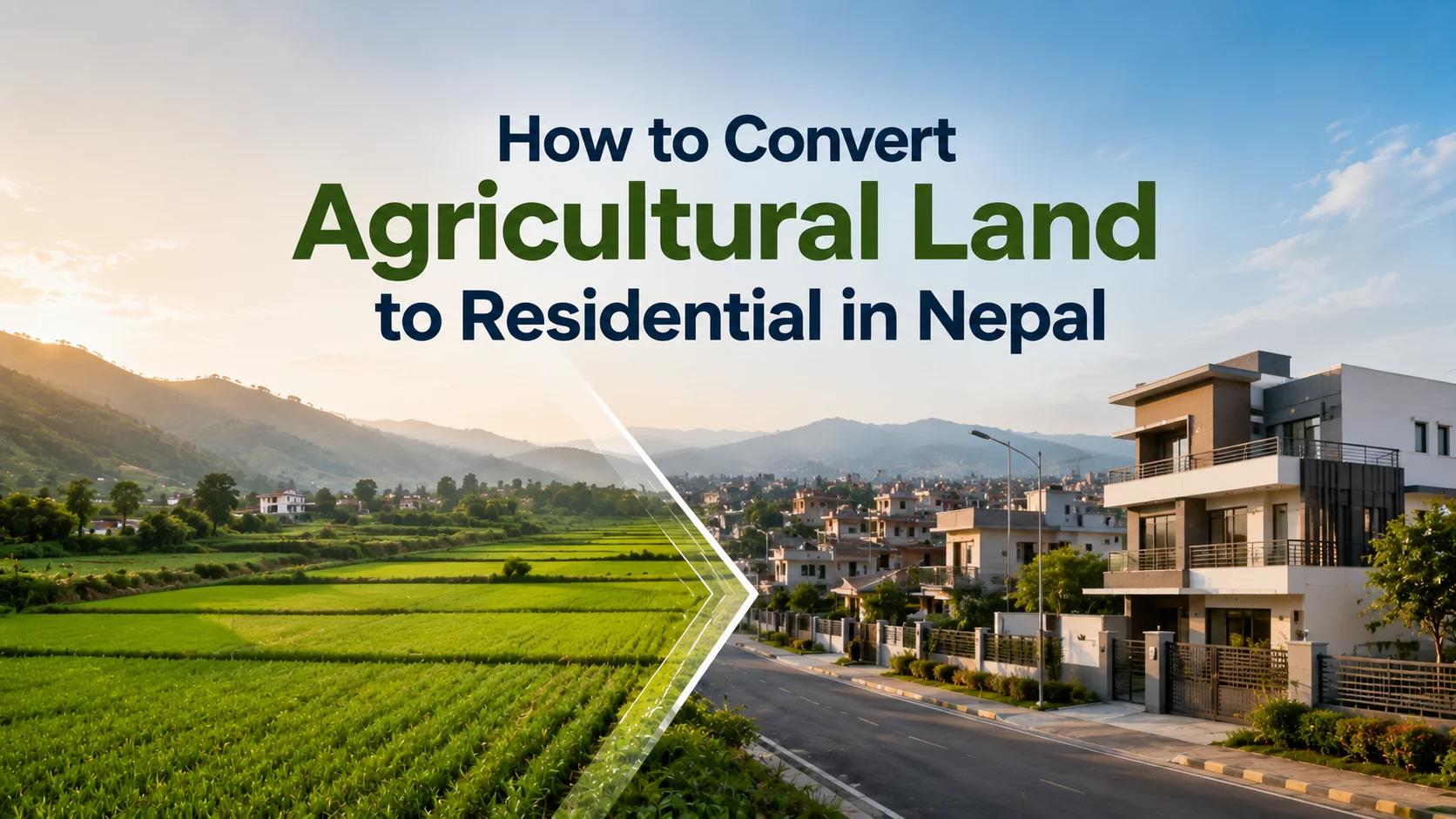
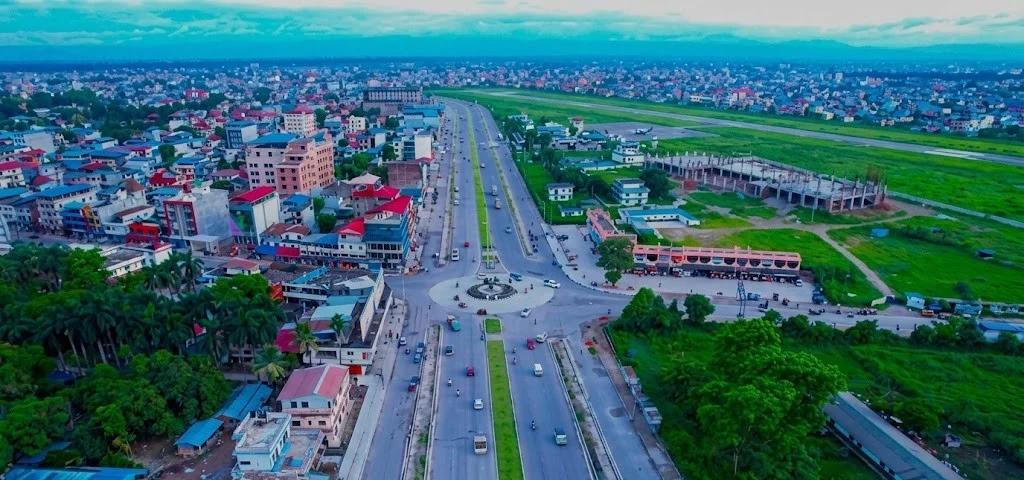
Thinking of building a house on land that is recorded as farmland? You are not alone. Across the Kathmandu Valley and fast-growing Terai towns, plenty of families own plots that still sit in the agricultural category on paper. The neighborhood around them has filled up with homes, but the record has not caught up.
Here is the short answer. In Nepal, you cannot simply decide on your own to treat agricultural land as residential. Land use is now controlled by the Land Use Act, 2019 (2076 BS) and the Land Use Regulations, 2079. To change a plot from the agricultural zone to the residential zone, you have to apply to your local government, which runs the process through its Local Land Use Council. Approval is not automatic. It depends on how your municipality has classified land, whether your plot falls inside a residential or mixed-use area, and whether officials accept your justification.
That is the plain version. The rest of this guide covers what the law says and why so many plots are stuck. It also walks through the step-by-step process, the costs to expect, and the traps to avoid before you buy or build.
Quick answer
- Agricultural land in Nepal is protected. You cannot build a house on it or plot it for sale without approval from your local government.
- Land is now sorted into ten official zones under the Land Use Act, 2019. Agricultural and residential are two separate zones.
- To convert, you apply to your municipality or rural municipality, which decides through its Local Land Use Council. You must give a clear reason.
- As of mid-2026, only 390 of Nepal’s 753 local units had finished classifying their land, and subdivision was suspended in 363 of them. So in many places the system is still being set up.
- Before you buy any plot to build on, check its land use category at the local level first. Do not assume.
Why agricultural land is treated differently now

For decades, people in Nepal bought farmland, split it into small plots, and sold it for housing with very little oversight. That is a big reason valley farmland shrank so fast. The government’s answer was the Land Use Act, 2019, followed by the Land Use Regulations that came into force on 23 May 2022.
The law does two main things. First, it requires every local government to classify all the land within its boundaries into ten categories. Second, it restricts what you can do once land carries a label.
The ten zones are agricultural, residential, commercial, industrial, mines and minerals, forest, public use, cultural and archaeological, river and stream and lake and wetland, and a final “others” category. These are the categories confirmed by the Kathmandu Post and legal summaries of the Act.
The key point for you is simple. If your plot is classified as agricultural, the law says you cannot build a normal house on it. Farm-related structures are allowed. A family home for residential living is not, unless the land use is changed first. The Act also bans the commercial plotting and sale of agricultural land without prior approval from the local land use body.
The system is still half-built, and that matters
This is where theory meets reality in 2026. The classification work is far from done.
According to the Ministry of Land Management, Co-operatives, Federal Affairs and General Administration, only 390 of Nepal’s 753 local units had completed land classification by mid-2026. Because so many had not finished, the federal government suspended land subdivision in 363 local units starting mid-July 2026. This was the third time the suspension had been reinstated. It happened before in 2025, when subdivision was halted in 500 local units, and back in September 2024, when services were disrupted in 620.
So what does the suspension actually block? It blocks kitta kaat, the splitting of one parcel into smaller plots, in local units that have not classified their land. The ministry has clarified that other transactions still go ahead. You can still transfer a whole parcel, pass land through inheritance, do ansha banda (partition among family), complete court-ordered transfers, and cancel records. The freeze is aimed at unplanned plotting, not at every land deal.
Why the delay? Money and manpower. The president of the Municipal Association of Nepal has said classification costs a local unit at least Rs 1.5 million to Rs 2 million. Many simply do not have the budget or the technical staff. Keep this backdrop in mind. Your ability to convert land depends heavily on whether your own municipality has finished its map.
Can your agricultural plot actually be converted?
Before you spend money on applications, be honest about your odds. Conversion is far more likely to succeed when a few things line up.
Your plot sits inside or right next to an existing settlement. If homes already surround your land and it has road access, a residential or mixed-use designation is more realistic.
Your municipality has completed classification. If the local land use map already marks your area as residential or mixed, your job is mostly paperwork. If it marks the area as strictly agricultural, a change is much harder.
The plot is not prime farmland. Land use bodies are told to protect productive agricultural land. A fertile, irrigated field in a farming belt is meant to stay farmland. A dry, marginal plot in a built-up ward is a different story.
You have a genuine reason. The regulations expect a clear justification for changing one category to another. “I want to sell it as housing plots” is weak. “My family needs to build a home and the surrounding area is already residential” is stronger.
If your land is deep inside a designated agricultural zone with no settlement nearby, accept that conversion may not be possible right now. That is the whole point of the law.
Step-by-step: how to convert agricultural land to residential

The exact counter, form, and fee vary from one local government to another, especially while the system is still rolling out. The general path looks like this.
Step 1. Check the current land use classification. Start at your municipality or rural municipality office and ask for the land use status of your kitta (parcel) number. Cross-check against the ward. You want to know two things: what zone your plot is in, and whether your local unit has finished its classification map at all.
Step 2. Gather your documents. Expect to need your lalpurja (land ownership certificate), a recent malpot rasid (land revenue receipt) showing tax is paid, the naksa or kitta naksa (parcel map) from the Survey Office, your citizenship certificate, and recent photos. If someone else is applying for you, you will need a mukhtiyarnama (power of attorney).
Step 3. File an application with the Local Land Use Council. The application goes to your local government, which handles land use through its Local Land Use Council. You must state clearly why the land should move from agricultural to residential. Attach evidence that the area is already residential in character if that is your case: neighboring houses, road access, and utility lines all help.
Step 4. Site verification. Officials or technical staff may inspect the plot. They check the surroundings, road access, and whether the request fits the wider land use plan. This is where a plot inside a real settlement has the advantage.
Step 5. Council review and decision. The local level reviews the request. For bigger or more sensitive changes, the matter can be escalated. The structure runs from the Local Land Use Council up to Provincial Land Use Councils and the National Land Use Council at the federal level. A routine change that fits the plan can be handled locally. A change that conflicts with the plan may be refused.
Step 6. Record update and building permit. If the change is approved, the classification is updated. Only then should you move toward a building permit. Remember that a zoning or land use permit and a building permit are two different things. The first decides what the land may be used for. The second decides whether your specific structure meets building code and setback rules. You need both before construction.
What it costs
Be careful with numbers here, because fees for land use conversion are set locally and are not uniform across the country. Treat any single figure you hear as a starting point, not a rule, and confirm the current schedule at your own municipality.
What you can budget for with more confidence are the related costs that come after approval. If you later subdivide the land, there are Survey Office fees for kitta kaat. If you transfer or sell, there are registration charges and, for a seller, capital gains tax paid at the Land Revenue Office. Building a house brings its own permit fees and technical drawing costs.
One more figure gives useful context, even though it is a government cost rather than yours. Classifying land costs each local unit an estimated Rs 1.5 million to Rs 2 million, which explains why the rollout has been slow and uneven. That slowness can add delay to your own application, so plan for a process measured in weeks or months, not days.
Plot size rules you should know
Even after a change of use, you cannot slice land into any size you like. The regulations set minimum plot sizes, and these were eased over time to reflect reality on the ground.
Under the First Amendment, residential and commercial land can be divided into plots as small as 80 square meters. Agricultural land can be divided into parcels of up to 508.74 square meters. Before that amendment, residential land could not be split below 130 square meters, and agricultural land had minimum sizes of 500 square meters in the Kathmandu Valley and 675 square meters in the Tarai and Inner Madhesh.
These thresholds matter if your plan is to convert and then split for family members or sale. A plot that is fine as one holding may not meet the rules once divided. Check the current standard for your zone before you count on a subdivision.
Common mistakes and red flags
Assuming the neighborhood decides the category. A ward full of houses does not automatically make your plot residential on paper. The record is what counts. Verify it.
Buying farmland “for building” on a seller’s promise. Some sellers pitch cheap agricultural plots as future house sites and say conversion is a formality. It is not. If the land stays agricultural, you may be stuck with a plot you cannot legally build on or split.
Ignoring the subdivision suspension. If your local unit is one of the 363 where subdivision is currently frozen, you cannot do kitta kaat there right now, whatever a broker tells you. Confirm your municipality’s status directly.
Skipping the malpot rasid. Land offices want to see that your land revenue is paid and up to date before they process anything. Clear any dues first.
Confusing land use approval with a building permit. Getting the zone changed is only half the job. You still need a building permit that meets code before you pour a foundation.
Not checking for roka or disputes. A land use change will not help if the plot is frozen (roka) or tied up in a dispute. Verify the parcel is clean at the Land Revenue Office before you invest in the conversion process.
Frequently asked questions
Can I build a house on agricultural land in Nepal without converting it? No. The Land Use Act, 2019 prohibits building homes and similar structures on agricultural land, aside from farm-related buildings and structures that already existed. You need the land use changed to residential first.
Who approves the change from agricultural to residential? Your local government does, working through its Local Land Use Council. Larger or more sensitive cases can move up to the provincial and national land use councils. There is no single central office that stamps every request.
Why is land subdivision suspended in my municipality? Because the local unit has not completed the mandatory land classification. As of mid-2026, subdivision was suspended in 363 local units for this reason. Whole-parcel transfers, inheritance, and partition among family still continued during the suspension.
How long does conversion take? There is no fixed nationwide timeline, and it varies by local government. Because many municipalities are still finishing their classification maps and are short on staff and budget, plan for a process of several weeks to a few months, and longer if your case is escalated.
Is it cheaper to buy agricultural land and convert it? Agricultural land often looks cheaper up front. But if it cannot be converted, the low price means little. Factor in the real chance of refusal, the time cost, and the possibility that the plot stays farmland. Cheap land you cannot build on is not a bargain.
Does the plot have to be a minimum size? Yes, if you plan to divide it. Residential and commercial plots can go as small as 80 square meters under the amended rules, while agricultural parcels have their own limits. Confirm the current minimum for your zone before subdividing.
The bottom line
Converting agricultural land to residential in Nepal is possible, but it is a formal process, not a formality. It runs through your local government under the Land Use Act, 2019, it needs a real justification, and its success depends heavily on where your plot sits and whether your municipality has finished classifying land. In many places in 2026, the system is still being built, so patience and local verification are essential.
The safest move is to check first and buy second. Confirm the land use category, the subdivision status, and the cleanliness of the title at your local government and the Land Revenue Office before you commit money to any plot you intend to build on.
If you are still deciding where to buy, you can browse verified land and house listings on Basobaas and read our related guides on property registration in Nepal, understanding your lalpurja, and current land prices across Kathmandu. A little checking now saves a lot of regret later.
Latest Posts
Fresh reads from Basobaas