Blacklisted and Disputed Land in Nepal: How to Check Before You Buy
Buying land in Nepal is exciting until you learn the plot you paid for is frozen by a court order or already mortgaged to a bank. It happens more often than people admit. This guide shows you how to run a disputed land check in Nepal before any money changes hands.
The short version: never trust a lalpurja at face value. Take the kitta number to the Land Revenue Office (Malpot), match it against the official register, check the cadastral map, and confirm there is no roka (freeze), no bank claim, and no active court case tied to the plot. Most of these checks are free or cheap. All of them are faster than a lawsuit.
Quick answer: how to check disputed land in Nepal

Before you sign anything or pay a deposit, do these five things.
- Get the kitta number and ward from the seller, then verify the current owner at the District Land Revenue Office (Malpot). This costs nothing and takes about 30 to 60 minutes.
- Ask the Malpot staff directly whether the plot has a roka (freeze), a mortgage entry, or any recorded restriction.
- Cross-check the plot on the cadastral map using Mero Kitta from the Department of Survey, so the boundaries and size match the lalpurja.
- Ask around locally. Neighbors, the ward office, and the local tea shop know about family fights, boundary rows, and old sale promises.
- If anything looks off, hire a property lawyer before you proceed. A few thousand rupees now beats years in court later.
If any single check fails, walk away or pause the deal. A clean plot has nothing to hide.
What counts as “disputed” or “blacklisted” land?

People use the word “blacklisted” loosely. In practice, a plot can be problematic for several different reasons, and each one shows up in a different place.
A plot can be under a roka (also spelled rokka). Roka means the land is officially frozen or locked in the government record. While a roka sits on the plot, it cannot be sold or transferred until the restriction is lifted. Roka usually comes from one of three things: a bank mortgage, a court order, or an active legal dispute.
A plot can be mortgaged to a bank. If the current owner took a loan against the land, the bank holds a claim. You cannot get clean title until that loan is cleared and the bank releases its charge.
A plot can be stuck in a court case. Family inheritance fights (ansha), boundary disputes, and broken sale agreements all end up in court. If the plot is part of a live case, ownership is not settled, no matter what the lalpurja says.
A plot can be government or public land wrongly registered in a private name. This is the ugliest category. When authorities catch it, the fraudulent registration can be nullified, and the “owner” loses everything. Recent cases show this is real. In one matter, the Commission for the Investigation of Abuse of Authority (CIAA) filed charges against former Land Revenue Office employees. The allegation was forging documents to register government land in Solukhumbu under private ownership. In another, a case went to court over the lease of Nepal Trust land in Durbarmarg.
The lesson is simple. A printed lalpurja is not proof that the land is clean. It is only a starting point.
Start with the lalpurja, but do not stop there

The lalpurja (लालपुर्जा) is Nepal’s land ownership certificate. It is issued by the District Land Revenue Office and records who owns a specific plot. The name comes from the traditional red color of the document.
When a seller hands you a lalpurja, check the basics first. Look at the owner’s name, the kitta number, the area, the district, the municipality or rural municipality, and the ward. Then compare that name against the seller’s citizenship certificate (nagarikta). If the names do not match, ask why. A common scam is someone selling land they do not actually own, using a forged or borrowed document.
But here is the catch. A lalpurja can be forged. It can also be genuine while the plot behind it is frozen or mortgaged. That is why the certificate alone never settles the question. You have to confirm it against the government’s own records.
For a deeper walkthrough of the document itself, see the Basobaas guide on the lalpurja and how to verify it.
Verify ownership and roka at the Malpot (Land Revenue Office)
This is the single most important step. The District Land Revenue Office, known locally as the Malpot Karyalaya, holds the official ownership register for every plot in its district.
Go to the Malpot for the area where the land sits. Bring the kitta number and the ward. Ask the staff to pull up the current record and confirm the registered owner. This service is generally free and takes about 30 to 60 minutes depending on the queue.
While you are there, ask the specific questions that matter for a disputed land check:
- Is there a roka on this plot?
- Is there a mortgage or bank charge recorded against it?
- Is there any court order or restriction noted in the file?
- Does the owner name match the person trying to sell it to me?
- Are there unpaid land taxes (malpot tiro)?
If the officer confirms a roka or a mortgage, stop. Do not pay a deposit on the promise that “it will be cleared soon.” Get it cleared and re-verified first, in writing.
The Malpot uses the Land Revenue Information Management System (LRIMS) for these records, so ask whether the digital record and the paper file agree. They should.
Cross-check the plot on the cadastral map with Mero Kitta
Ownership is one thing. The physical plot is another. Fraud and honest mistakes both happen at the boundary.
The Department of Survey runs Mero Kitta (merokitta.dos.gov.np), an online system that lets you view and print the cadastral map (naksa), the plot register, and the field book. There is also an official Mero Kitta mobile app, published by the Department of Survey. It is on Google Play and the Apple App Store, and it lets you submit service requests and track them from your phone.
To use it, you generally need the map number and the kitta number, plus scans of the lalpurja and citizenship (usually kept under 1 MB each). Once you have the map, check three things. Does the kitta number on the map match the lalpurja? Does the plot shape and size match? Is the plot where the seller says it is?
This step catches a classic trick, where a seller shows you a nice roadside plot but the kitta number on paper points to a landlocked strip behind it. The map does not lie.
Ask locally: the check no database can do
Some of the most useful information never makes it into a government file, at least not right away.
Talk to the neighbors on all sides of the plot. Ask the ward office. Chat with people at the nearby shop. You are listening for a few things. Is there a family fight over inheritance? Did the owner already promise or “sell” this land to someone else informally? Is there a shared boundary wall or an old right-of-way that could become a fight later? Is access to the plot actually legal, or does the only road cross someone else’s land?
Boundary and access disputes are among the most common land problems in Nepal, and they often start long before a case is filed. Locals usually know. Spend an afternoon there before you spend your savings.
What to do if the land is in a court case
If your checks reveal an active dispute, understand how these cases move before you decide anything.
Nepal’s system pushes many land disputes toward mediation first. Boundary problems often go through the Survey Office. Land revenue matters can go to the Revenue Tribunal. General ownership disputes go to the District Court, with appeals to higher courts from there. Cases involving government or public land can also involve the CIAA, which can seek nullification of a fraudulent registration.
The practical takeaway for a buyer is blunt. Do not buy into a live case hoping to inherit a win. Until the case is finally settled and the record is updated, the ownership is not certain. If you truly want the plot, wait for the judgment and re-verify at the Malpot afterward.
Documents and details to collect before you commit
Keep a simple checklist. Ask the seller for each item, and verify each one independently.
- The original lalpurja, not a photocopy, with a clear kitta number and area.
- The seller’s citizenship certificate, matching the lalpurja name.
- The latest land tax (malpot tiro) receipt, showing taxes are current.
- The cadastral map (naksa) print from the Survey Office.
- A tax clearance and confirmation of no roka from the Malpot.
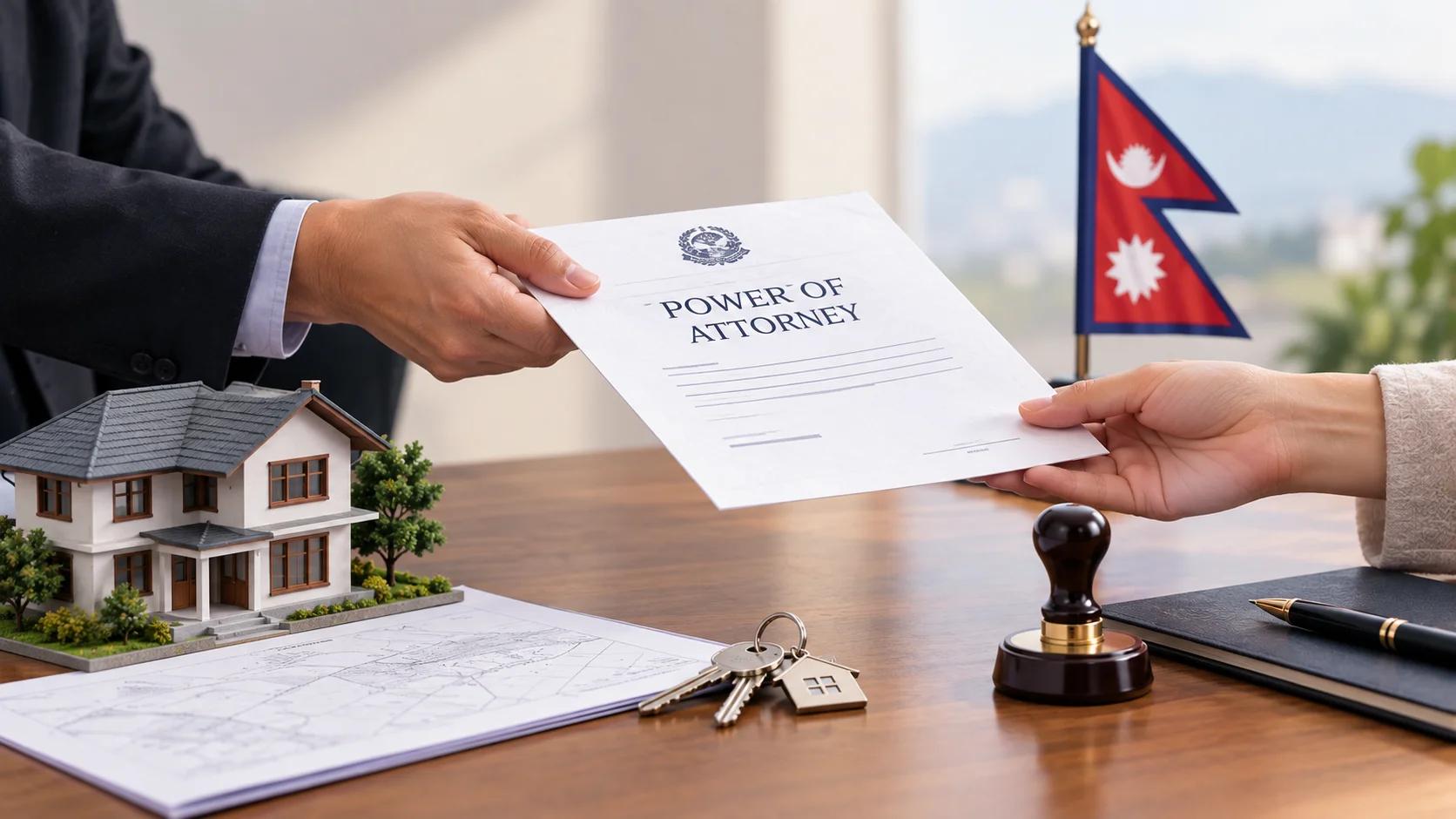
- If the seller is not the registered owner, a valid power of attorney (mukhtiyarnama), and be extra careful here.
- For inherited land, the family partition (ansha) papers, so no co-heir can challenge the sale later.
If the seller resists giving you any of these, treat that as a red flag, not a small inconvenience.
How the checks fit into the buying process
A disputed land check is not a separate errand. It is part of buying the property correctly. Once the plot passes your checks, the sale is completed and recorded at the Land Revenue Office, where the old lalpurja is surrendered and a new one is issued in your name. Without that registration, the sale has no legal protection, even if you paid in full.
For the full buying and registration flow, see the Basobaas guides on property registration in Nepal and how to buy a house in Nepal. Rules and fees also shift over time, so it helps to keep up with changes like the Land Revenue Act updates.
Common red flags that signal disputed land
Watch for these patterns. Any one of them justifies a pause.
- A price that is far below the going rate for the area. Cheap land is often cheap for a reason.
- Heavy pressure to pay a deposit fast, before you can visit the Malpot.
- A seller who only shows a photocopy of the lalpurja and avoids the original.
- A name mismatch between the lalpurja and the citizenship certificate.
- Vague answers about roka, mortgages, or “a small family matter” over the land.
- No clear, legal road access to the plot.
- The seller pushing to skip formal registration to “save on taxes.”
None of these guarantees fraud. All of them mean you slow down and verify harder.
Frequently asked questions
What does roka (rokka) mean on land in Nepal? Roka means the plot is officially frozen or locked in the land record. While roka is active, the land cannot be sold or transferred. It usually comes from a bank mortgage, a court order, or an active legal dispute. You can confirm roka status at the District Land Revenue Office (Malpot).
Can I check disputed land in Nepal online? Partly. The Department of Survey’s Mero Kitta system lets you view the cadastral map, plot register, and field book online, which helps confirm the plot and boundaries. For ownership status, roka, and mortgage entries, the reliable check is still an in-person visit to the Malpot, where the LRIMS record is held.
How much does it cost to verify land at the Malpot? Confirming the current owner and asking about roka or mortgages at the Land Revenue Office is generally free and takes about 30 to 60 minutes. Map prints from the Survey Office may carry small service fees.
Is a lalpurja enough proof that land is safe to buy? No. A lalpurja shows registered ownership, but it can be forged, and a genuine lalpurja can still sit on a plot that is frozen, mortgaged, or in a court case. Always verify the certificate against the Malpot record and the cadastral map.
What happens if I buy land that turns out to be government land? If authorities find that public or government land was registered in a private name through fraud, the registration can be nullified. That means the buyer can lose the land. This is why verifying the source and history of the title matters, not just the current certificate.
Should I hire a lawyer to check land before buying? For a large purchase, yes. A property lawyer can review the title chain, spot a weak power of attorney or partition issue, and confirm there is no hidden claim. The fee is small next to the value of the land and the cost of a dispute.
Before you sign
A disputed land check in Nepal is not complicated. It is just a set of steps most buyers skip because they are in a hurry or they trust the wrong person. Verify the owner at the Malpot. Confirm there is no roka or bank claim. Match the plot on the map. Ask the neighbors. When in doubt, get a lawyer.
Do the boring checks first, and the exciting part, owning your land with a clean lalpurja in your name, actually stays exciting.
Looking for land or a home with a clear title? Browse verified listings on Basobaas, or post your property to reach serious buyers across Nepal.
Latest Posts
Fresh reads from Basobaas