How to Buy a House in Nepal From Abroad: An NRN Process Guide
Buying a house in Nepal while you live overseas is very doable. The key is knowing which set of rules applies to you, and then setting up a trusted person on the ground to sign and register on your behalf.
Here is the short version. If you still hold Nepali citizenship, you can buy property in Nepal just like any resident. There are no special area limits and you do not need extra government permission. If you have taken foreign citizenship and now qualify as a Non-Resident Nepali (NRN), you can still own a home. But there are size limits, an approval step through the Ministry of Foreign Affairs, and a separate NRN card to sort out first.
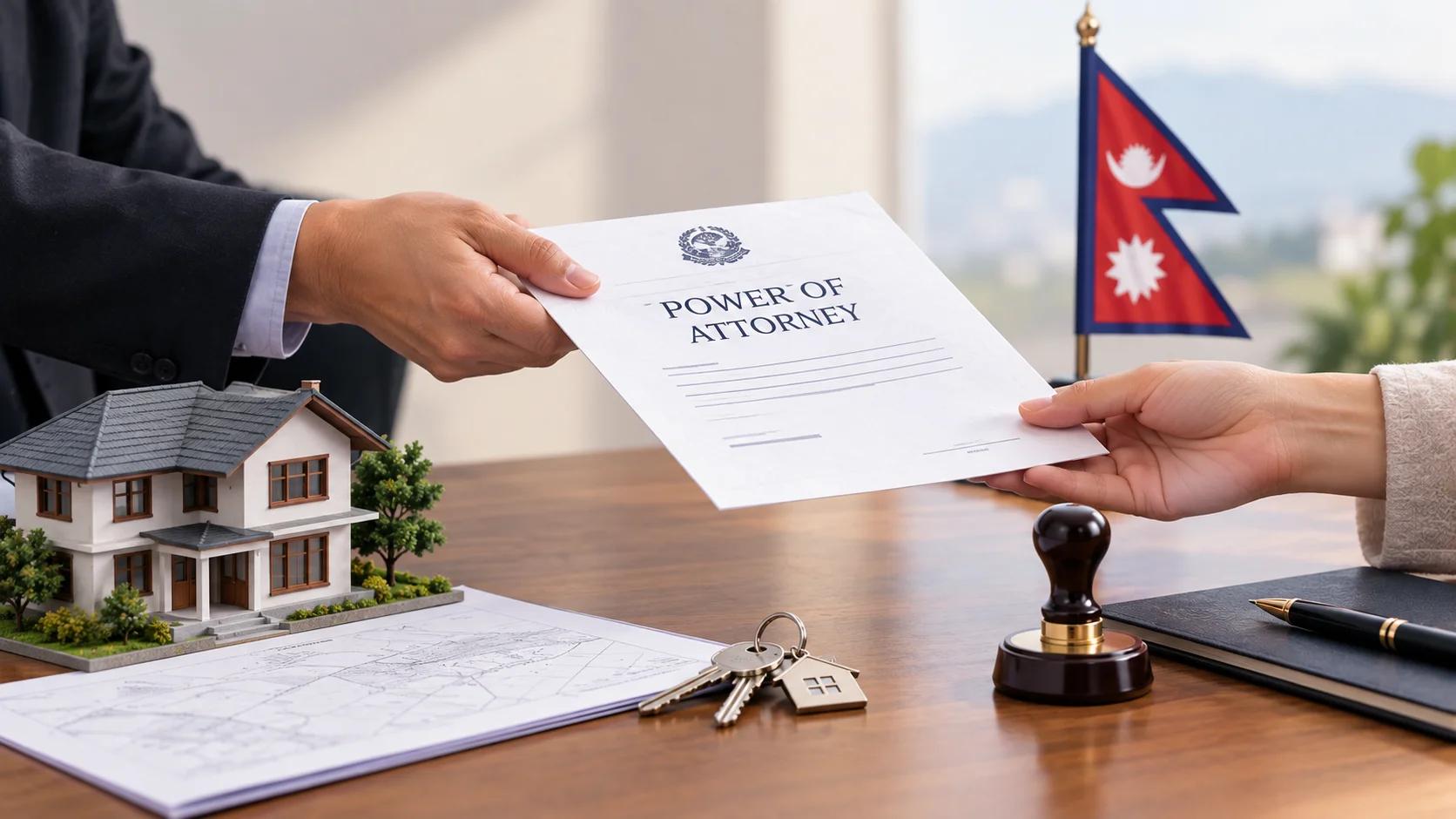
Most people buying from abroad handle the actual paperwork through a power of attorney, called a mukhtiyarnama. You give a family member or a lawyer in Nepal the authority to sign the deed and complete registration at the Land Revenue Office (Malpot). You stay put in Sydney, Dallas, Doha, or wherever you are based.
This guide walks through the whole thing. Rules and fees change, so treat the numbers here as a guide as of 2026 and confirm the current figures before you commit money.
Quick answer: what applies to you
Your first job is to figure out which category you fall into. It changes almost everything that follows.
You are a Nepali citizen living abroad. Maybe you are on a work visa in the Gulf, a student in Australia, or a green card holder in the United States who never gave up Nepali citizenship. You are treated as a Nepali citizen for property. You can buy residential or agricultural land, there is no ceiling beyond the normal land laws, and you do not need MoFA approval. You just cannot be physically present, so you buy through a power of attorney.
You are an NRN with foreign citizenship. You were once Nepali, or your parents or grandparents were, and you now hold a foreign passport. Under the Non-Resident Nepali Act, 2064 (2008) and the Non-Resident Nepali Rules, 2066, you can own a house or land for personal or family use. But there are area limits by location, you need approval from the Ministry of Foreign Affairs, and your ownership certificate is issued in a distinct blue color to mark NRN property. Agricultural and forest land are off limits, except when you inherit them.
If you bought the property back when you were still a Nepali citizen, the area limits do not apply to that property.
How much land can an NRN own in Nepal?
For NRNs with foreign citizenship, the law caps how much you can buy based on where the property sits. These limits come from the Non-Resident Nepali Rules and are confirmed across multiple legal sources and on Basobaas itself.
| Location | Maximum area |
|---|---|
| Kathmandu Valley | 2 ropani |
| Other municipalities (hills) | 4 ropani |
| Municipalities in the Terai | 8 kattha |
| Rural Terai (village areas) | 1 bigha |
| Other rural areas | 10 ropani |
For a single house in Kathmandu, 2 ropani is generous. That is roughly a large plot, and most valley homes sit on far less. So for the average buyer, the limit is not a real problem.
One firm rule to remember: the property must be for your own use or your family’s use, not for running a business on that residential land.
Step 1: Get your NRN card (foreign citizens only)

If you hold foreign citizenship, you will need an NRN Identity Card before you can register property in your name. Nepali citizens abroad can skip this step.
The NRN card is issued to people of Nepali origin who now hold foreign citizenship, generally outside the SAARC region. You qualify if you were once a Nepali citizen, or if a parent or grandparent was. You apply online through the NRNA portal, or at a Nepali embassy or consulate, or at the Department of Immigration in Kathmandu.
Plan ahead on timing. Processing commonly takes around 4 to 12 weeks depending on document checks and the workload at the office handling your file. Fees vary by mission but tend to fall in the range of USD 50 to 100. The card also lets you enter Nepal without a visa while it stays valid, which is a nice bonus when you fly back to view a property or attend registration.
Step 2: Find and verify the property from a distance
This is where buyers get burned. You cannot walk the plot yourself, so you have to lean on documents and on people you trust.

Start your search online. Platforms like Basobaas let you filter homes and land by location, price, and size, so you can shortlist without being in the country. Browse listings, save a few, and ask for more photos and a short video walkthrough of each one.
Before any money moves, get these checks done on the ground:
- Confirm the lalpurja (ownership certificate). The seller’s name on the certificate must match their citizenship. Have your representative or lawyer verify it against records at the Malpot office.
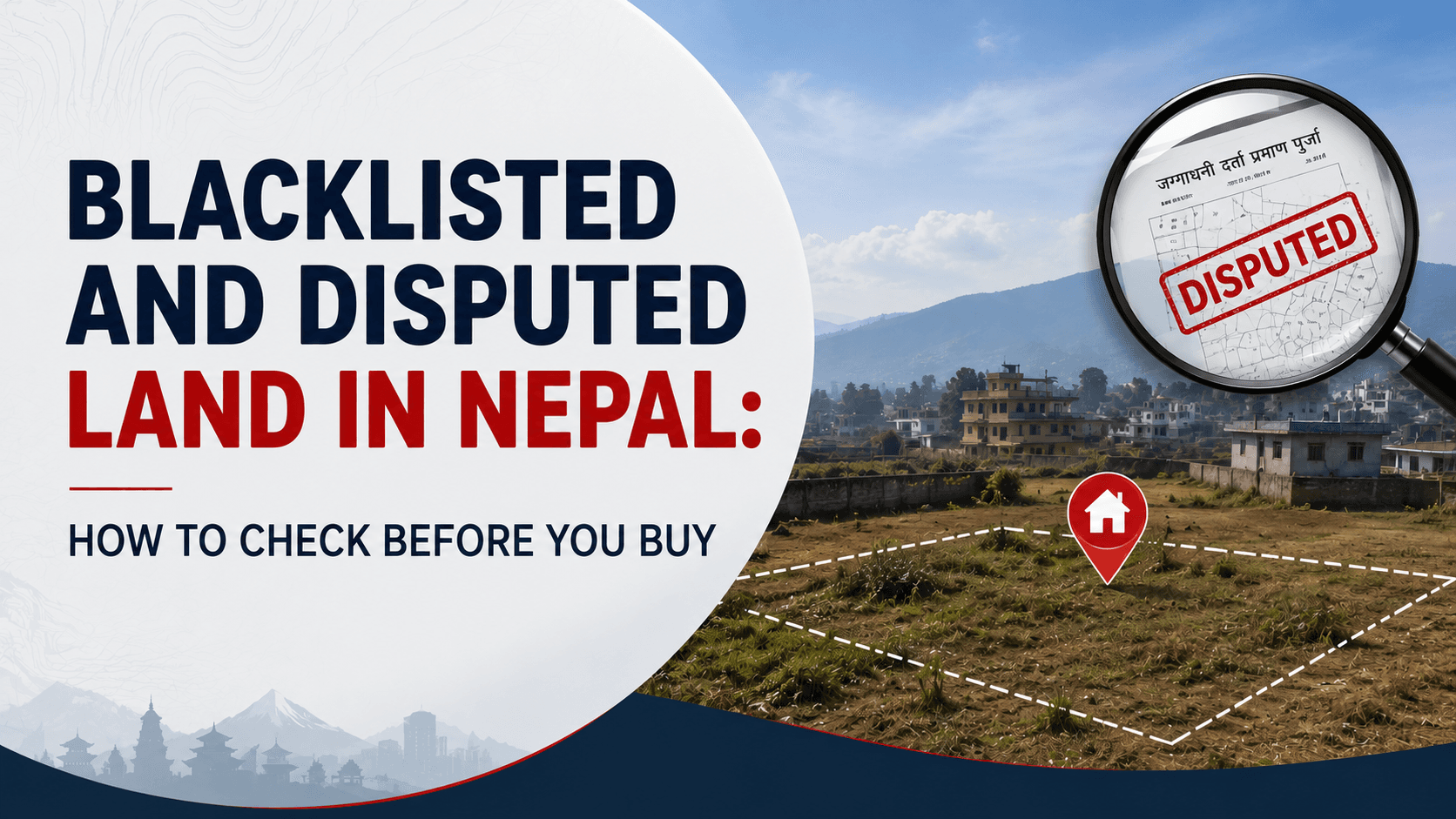
- Check for roka (a freeze) or dhito (mortgage). Land can be frozen by a court or a bank, or pledged as loan security. A Malpot search shows this. Never buy frozen or disputed land.
- Match the naksa (blueprint) to the actual plot. The map, the boundaries, and the land on the ground should all agree. Ask for a fresh field visit.
- Confirm road access. A plot with no legal road access is hard to build on and hard to resell. Ask for a ghar bato sifaris from the ward office where relevant.
- Get the tax receipts. The malpot rasid (land revenue receipt) should be paid up to date.
Because you are remote, pay for a proper title search by a lawyer rather than trusting a broker’s word. It is cheap insurance against a fake owner or forged papers. For a deeper checklist, our guide on how to buy real estate in Nepal covers the ground-level verification in more detail.
Step 3: Set up a power of attorney (mukhtiyarnama)

Since you cannot sign in person, you hand that authority to someone in Nepal. This is the single most important document for a remote purchase. Get the wording right.
Here is how it usually works from abroad:
- Draft it in Nepal first. Have a registered Nepali lawyer prepare the mukhtiyarnama on the correct Nepali paper, spelling out exactly what your representative can do. For a purchase, that means the power to identify the property, sign the sale agreement and deed (rajinama), pay the funds, and complete registration and namsari (ownership transfer).
- Notarize it at the Nepali embassy or consulate. In the United States, that is the Embassy in Washington DC or the Consulate in New York. You bring two copies of the document and an application to the head of mission. You also bring your original and notarized citizenship and passport, a notarized copy of your representative’s citizenship, and two passport photos of each of you. Property POAs usually need witnesses too.
- Send the attested document to Nepal. Your representative then uses it to act for you at every stage.
Attestation fees at embassies are small, often in the USD 5 to 40 range depending on the country.
Pick your representative carefully. A power of attorney is a lot of trust to place in one person. Choose a close relative or a lawyer you have vetted, keep the powers specific to this one transaction, and know that you can revoke the mukhtiyarnama if things go wrong.
Step 4: Arrange payment and financing
You have a few ways to fund the purchase, and each has its quirks when you are overseas.
Pay from your own funds. Many buyers abroad simply send money home through formal banking channels into a Nepali bank account, then pay the seller by bank transfer. Keep every receipt. Avoid large cash handovers. A clean paper trail protects you if a dispute comes up later and matters for tax.
Use an NRN foreign currency account. NRNs can hold foreign currency accounts in Nepal, which is useful for moving money in and, potentially, for taking proceeds back out later.
Take a home loan. Some Nepali banks lend to NRNs, though the terms often differ from what residents get, and you may need a co-applicant in Nepal. If a local loan is not practical, buyers often use remittance savings directly. Our guide on how to get a home loan in Nepal explains eligibility and documents.
A word on getting money back out. The rules on repatriating sale proceeds have been read differently by different practitioners. Some point to older restrictions where Nepal Rastra Bank did not approve sending land-sale money abroad. Others point to provisions under the NRN Act and NRB circulars that allow repatriation through formal banking channels, backed by your purchase deed, sale deed, and tax clearance. Because the guidance conflicts, do not assume you can freely wire the proceeds home. Confirm the current NRB position with a lawyer or the bank before you rely on it.
Step 5: Get MoFA approval (NRN foreign citizens only)
If you hold foreign citizenship, your representative files an application with the Ministry of Foreign Affairs before the purchase is registered. The approval depends on the location and the purpose of the property. Nepali citizens abroad do not need this step at all.
Once approval comes through, registration proceeds at the Malpot office, and NRN property is recorded on that distinct blue certificate.
Step 6: Register the property and complete namsari
With the deed signed under your power of attorney, your representative registers the sale at the Land Revenue Office and completes the namsari, the transfer that puts the property in your name.
Budget for registration and stamp charges. These vary by municipality and are calculated on the government valuation of the property, so the exact figure depends on where you buy and the assessed value. Confirm the current rate for your municipality before closing, and note that female buyers get a discount on registration fees, which is worth using if you register in a wife’s or mother’s name. For a full breakdown, see our guide on how to sell property in Nepal, which covers the fee side from the other direction.
After registration, make sure your representative collects the new lalpurja and the updated tax receipts. Keep digital copies. You want to be able to prove ownership from abroad without waiting on anyone.
Common mistakes buyers make from abroad
A few patterns show up again and again. Learn from them.
- Skipping the title search to save a little money. A remote buyer has the most to lose from a bad title. Always pay for a proper legal check.
- Giving a broad, open-ended power of attorney. Keep it narrow. Tie it to this one property and this one transaction.
- Paying large sums in cash through intermediaries. Use bank transfers and keep receipts.
- Assuming NRN rules when you are still a citizen, or the reverse. The two paths are different. Confirm your category first.
- Forgetting about tax and future resale. Think about capital gains and how you will eventually get money out before you buy, not after.
Frequently asked questions
Can an NRN with foreign citizenship buy agricultural land in Nepal?
Generally no. Agricultural land and forest land are off limits for NRNs, with one main exception: you can inherit ancestral property, including agricultural land, without the usual approval.
Do I have to fly to Nepal to buy a house?
No. Most buyers abroad complete the whole purchase through a mukhtiyarnama given to a trusted representative. You may still want to visit once to see shortlisted properties, but it is not required for registration.
I am still a Nepali citizen living overseas. Do the NRN area limits apply to me?
No. If you hold Nepali citizenship, you buy as a citizen. The NRN size limits and MoFA approval step apply to people who hold foreign citizenship.
How long does the NRN card take?
Commonly around 4 to 12 weeks, depending on document verification and the office handling it. Apply well before you plan to register a property.
Can I send the sale proceeds back abroad if I sell later?
Maybe, but do not assume it. The rules have been read differently by different practitioners, and Nepal Rastra Bank approval is involved. Confirm the current position with a lawyer or your bank before you rely on repatriating funds.
Who should I name in my power of attorney?
A close relative or a lawyer you trust and have vetted. Keep the powers specific to this transaction, use witnesses, and remember you can revoke it if needed.
Ready to start your search?
Buying from abroad comes down to three things. Know your category, verify the property properly, and put the right person in charge on the ground through a clean power of attorney. Get those right and the rest is process.
You can begin the easy part today. Browse homes and land on Basobaas, shortlist a few that fit your budget and the area you have in mind, and line up a lawyer to run the checks before you send any money. When you are ready to sell or list a property from overseas, the same tools work in reverse.
This guide is general information as of 2026, not legal advice. Property rules, fees, and NRB positions change. Confirm the current details with a qualified Nepali lawyer before you commit funds.
Latest Posts
Fresh reads from Basobaas