How to Buy Your First Apartment in Nepal: A Complete Beginner’s Guide
Buying your first apartment in Nepal comes down to five things: fixing a realistic budget, arranging a home loan, checking the legal papers, understanding the common area rules, and registering the unit in your name. If you get those right, the rest is mostly paperwork and patience.
Here is the short version. As a first-time buyer in 2026, you can borrow up to 80 percent of the apartment’s value from a bank. That means you need about 20 percent as a down payment, plus a bit more for fees. Apartments carry a low registration fee, roughly 1 percent in most areas, which is far cheaper than the 4 to 5 percent charged on land and houses. And every legal apartment must come with an ownership certificate under the Ownership of Joint Housing Act.
This guide walks you through the whole process, from setting a budget to getting the keys. It is written for people doing this for the first time, so nothing is assumed.
Quick answer: what a first-time apartment buyer needs
- Down payment: about 20 percent of the price for first-time buyers, since banks can lend up to 80 percent.
- Home loan rate (2026): roughly 6 to 7 percent at state-owned banks, and around 7.25 percent and up at private banks for strong borrowers.
- Loan cap: up to NPR 3 crore for a first home, if the apartment is under 3,000 square feet and you have no prior housing loan.
- Registration fee: about 1 percent of the declared value for apartments in most areas (confirm with your local Land Revenue Office).
- Key document: the apartment ownership certificate, issued under the Ownership of Joint Housing Act, 2054 (1997).
- Extra buyer costs: monthly maintenance charges, parking, and utility connections.
Should you buy an apartment or a house or land?

For a first purchase in the Kathmandu Valley, an apartment often makes the most sense on price alone. Land inside the city core has become very expensive, with per aana rates in prime pockets running into several million rupees. A full house on your own plot means buying land first and then paying to build, which stretches most first-time budgets past breaking point.
An apartment gives you a central location for a fraction of that. You also skip the headache of managing construction, hiring a contractor, and sourcing materials. Shared amenities like backup power, water storage, parking, and security come built in.
The trade-off is that you own a unit inside a shared building, not the land under it. You pay monthly fees. You follow building rules. And resale can be slower than for land in some areas. If you want the pros and cons laid out in detail, see our guide on apartment vs house in Nepal.
Step 1: Set a realistic budget
Start with what you can actually afford, not the sticker price of the apartment you like.
A common rule that Nepali banks use is that your monthly loan installment should not eat up more than about 40 to 50 percent of your net monthly income. So work backward. If your household brings home NPR 150,000 a month, a safe installment is somewhere near NPR 60,000 to NPR 70,000.
Then remember that the price on the brochure is not your total cost. Budget for these on top:
- Down payment: around 20 percent of the price as a first-time buyer.
- Registration fee: roughly 1 percent for apartments.
- Legal and documentation costs: lawyer fees, notary, and small office charges.
- Interior and fit-out: many units are sold semi-finished, so keep money aside for a kitchen, wardrobes, and fixtures.
- Maintenance deposit: some buildings ask for an upfront contribution to a maintenance or reserve fund.
As a rough guide for 2026, compact one-bedroom or small two-bedroom units in emerging areas like Kapan, Tokha, and Lubhu often sit under NPR 1 crore. Two and three-bedroom apartments in established residential areas like Bhaisepati, Imadol, and Kapan tend to fall in the NPR 1 to 2 crore range. Per square foot rates in Bhaisepati and Imadol have been reported around NPR 7,000 to 11,000. These figures move with location, building age, and amenities, so treat them as a starting point and check current listings. Our apartments for sale in Kathmandu price guide breaks prices down by budget and area.
Step 2: Understand your home loan options

Most first-time buyers cannot pay cash, so the home loan is central to the whole plan.
How much can you borrow?
Nepal Rastra Bank, the central bank, sets the loan-to-value limit. For the current fiscal year (2082/83), a first-time homebuyer can borrow up to 80 percent of the property value. Everyone else is capped at 70 percent. The maximum loan amount for a first home was also raised to NPR 3 crore.
There are conditions attached to that first-home benefit. The apartment must not exceed 3,000 square feet. You must not have taken a housing loan from any institution before. And you cannot use rental income as your source of repayment. These rules come from the NRB monetary policy for 2082/83.
What interest rate should you expect?
As of mid-2026, home loan rates have been low because banks are sitting on excess liquidity. State-owned banks like Nepal Bank, Rastriya Banijya Bank, and ADBL have advertised effective floating rates near 6.5 percent. Private banks generally start around 7.25 percent for top-tier borrowers.
Note that most home loans in Nepal use a floating rate. That means your rate can move up or down over the years as the base rate changes. Ask the bank for the current premium over the base rate, and ask how often the rate resets.
What documents will the bank ask for?
Expect to submit, at minimum:
- Citizenship certificate and passport-size photos.
- Salary certificate and recent bank statements, or business income proof if self-employed.
- Tax clearance or PAN, depending on the bank.
- The apartment’s sale agreement and the developer’s legal documents.
- The apartment ownership certificate or the developer’s title papers.
The bank will also do its own valuation of the apartment. It lends against that valuation, not the price you negotiated, so a low valuation can shrink your loan. For a fuller walkthrough of the financing steps, our step-by-step guide to buying a house in Nepal covers pre-approval and disbursement.
Step 3: Find the right apartment and developer

Once your budget and loan plan are clear, start shortlisting. Look beyond the show flat.
Check the developer’s track record. Have they finished past projects on time? Talk to residents in their older buildings if you can. A polished sales office means little if handovers get delayed for years.
Inspect the actual unit and the building. Look for water seepage, cracks, and damp patches, especially near bathrooms and the roof. Test the taps and check water pressure. Ask about the water source. Many Kathmandu buildings depend on tanker supply and stored water, not a reliable municipal line.
Ask hard questions about the amenities you are paying for:
- Is there a backup generator, and who pays for the fuel?
- How much parking comes with the unit, and is it deeded to you?
- Is the lift maintained under contract?
- What is the monthly maintenance charge, and what does it cover?
If you want a room-by-room approach, use a proper inspection routine before you commit.
Step 4: Check the legal papers
This is the step first-time buyers rush, and it is the one that costs the most when it goes wrong.
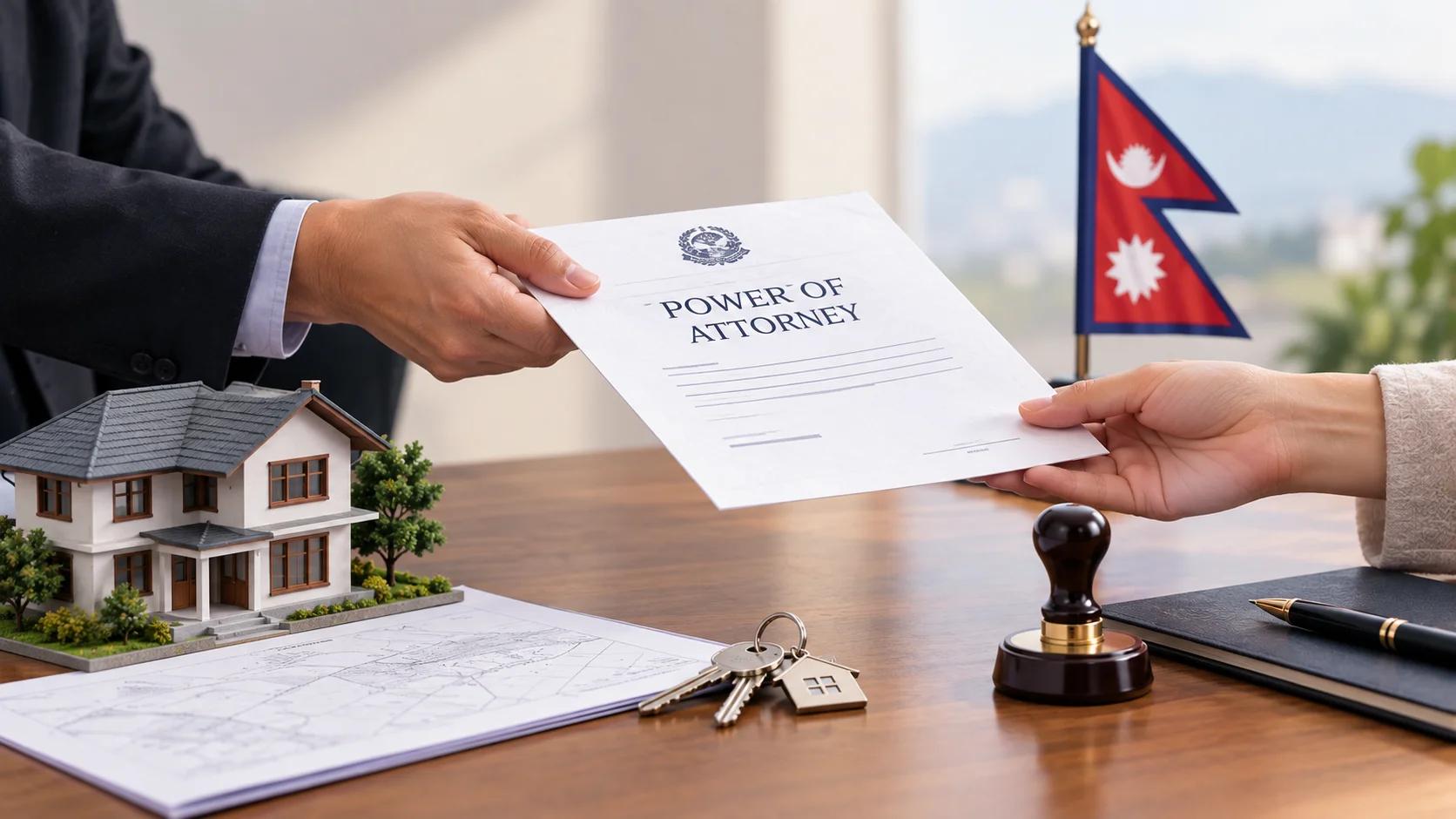
Apartments in Nepal are governed by the Ownership of Joint Housing Act, 2054 (1997). This law lets individuals own a single flat inside a shared building and lays out how the building is managed. The most important thing it does for you as a buyer is require that you receive an apartment ownership certificate when the title transfers. That certificate is your proof of legal ownership. No certificate, no clean ownership.
Before you pay anything beyond a token booking amount, confirm the following:
- The developer has clear title to the land the building sits on.
- The building has the required approvals and completion documents from the local authority.
- Your specific unit can be legally registered in your name.
- There is no bank lien, court case, or freeze (roka) on the property.
- The common areas, parking, and your unit’s share are clearly defined in writing.
It is worth paying a lawyer who knows property law to review the file. The fee is small next to the price of the apartment, and a good lawyer will catch problems you would not.
Step 5: Understand common area rules and maintenance
An apartment is not just your four walls. You are buying into a shared system, and that comes with ongoing duties.
Under the Ownership of Joint Housing Act, spaces like the staircase, lift, garden, and lobby are common areas owned jointly by all the unit owners. A management committee usually runs the building. As an owner, you are obliged to pay your share of the cost to run and maintain those common areas.
So budget for the monthly maintenance charge from day one. It typically covers security, cleaning, lift upkeep, common area electricity, and the generator. In larger complexes it can be a meaningful monthly cost, so ask for the exact figure and what it includes before you buy. Ask also whether there is a reserve fund for big repairs, like repainting the building or replacing the lift, and how it is funded.
Read the building rules too. Some complexes restrict pets, short-term rentals, or exterior changes to your unit. You want to know these before you sign, not after.
Step 6: Register the apartment in your name
Registration is what makes you the legal owner. It happens at the Land Revenue Office (Malpot), and the apartment title is recorded in your name.
Here is where apartments have a clear money advantage. The standard registration fee on land and houses ranges from about 4 percent in a municipality to 5 percent in a metropolitan city. Apartments, by contrast, are commonly charged around 1 percent of the declared value. This lower rate is deliberate policy to encourage vertical housing. Local governments set their own rates under the Local Government Operation Act, so confirm the exact figure with your Land Revenue Office before you rely on it.
Two more points worth knowing:
- Women buyers get a concession. On standard property registration, women receive about a 25 percent discount on the fee in urban areas. If the apartment is being bought by a woman, ask the office how the concession applies.
- Joint registration is cheap. When a husband and wife register a property jointly in both names, the fee can be a nominal amount, reportedly around NPR 100, which is meant to encourage joint ownership.
Bring your citizenship, the sale deed, the developer’s documents, tax clearances, and photos. The office will verify everything, collect the fee, and issue the transfer. Keep every receipt.
A simple checklist before you sign
- Down payment and fees saved, with a buffer.
- Loan pre-approved, rate and reset terms understood.
- Developer’s track record checked.
- Unit and building inspected for water, cracks, and damp.
- Clear title confirmed, no lien or roka.
- Apartment ownership certificate available.
- Monthly maintenance charge and what it covers, in writing.
- Parking clearly assigned to your unit.
- Lawyer has reviewed the full file.
- Registration done at the Land Revenue Office, receipts kept.
Frequently asked questions
How much down payment do I need for my first apartment in Nepal?
As a first-time buyer in 2026, banks can lend up to 80 percent of the property value, so you generally need about 20 percent as a down payment. Keep extra aside for the registration fee, legal costs, and interior work, since those are not covered by the loan.
Is an apartment cheaper to register than a house or land?
Yes. Apartments are commonly charged around 1 percent of the declared value at the Land Revenue Office, while land and houses can attract 4 to 5 percent depending on the area. This is a real saving, though local rates vary, so confirm with your office.
What is the apartment ownership certificate and why does it matter?
It is the document that proves you legally own your flat, issued under the Ownership of Joint Housing Act, 2054. Without it, your ownership is not clean. Never complete a purchase on a unit that cannot be registered and certified in your name.
Can I get a home loan if I am self-employed?
Yes, but the bank will want to see business income proof, bank statements, and tax records instead of a salary certificate. Self-employed borrowers sometimes face stricter scrutiny on income, so keep your documents in order and expect the bank to do its own valuation.
What ongoing costs come with owning an apartment?
Beyond the loan installment, you pay a monthly maintenance charge for the common areas, plus utilities and any contribution to a repair reserve fund. Ask for the exact monthly figure and what it covers before you buy, because it varies a lot between buildings.
Do women buyers really pay less?
On standard property registration, women buyers receive a concession of roughly 25 percent on the fee in urban areas. Buying jointly with a spouse can also cut the fee to a nominal amount. Ask your Land Revenue Office how the concession applies to your specific purchase.
Final thoughts
Buying your first apartment feels like a lot at first, but it breaks down into clear steps. Fix a budget you can live with. Line up the loan and know your rate. Check the legal papers properly, especially the ownership certificate. Understand the shared rules and monthly costs. Then register the unit in your name and keep every document.
Take your time on the parts that matter and lean on a good lawyer for the legal review. Rates, fees, and rules change from year to year, so verify the current numbers before you commit.
When you are ready to start looking, you can browse apartments for sale on Basobaas and compare options across the Valley in one place.
Latest Posts
Fresh reads from Basobaas