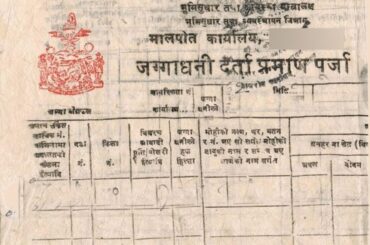
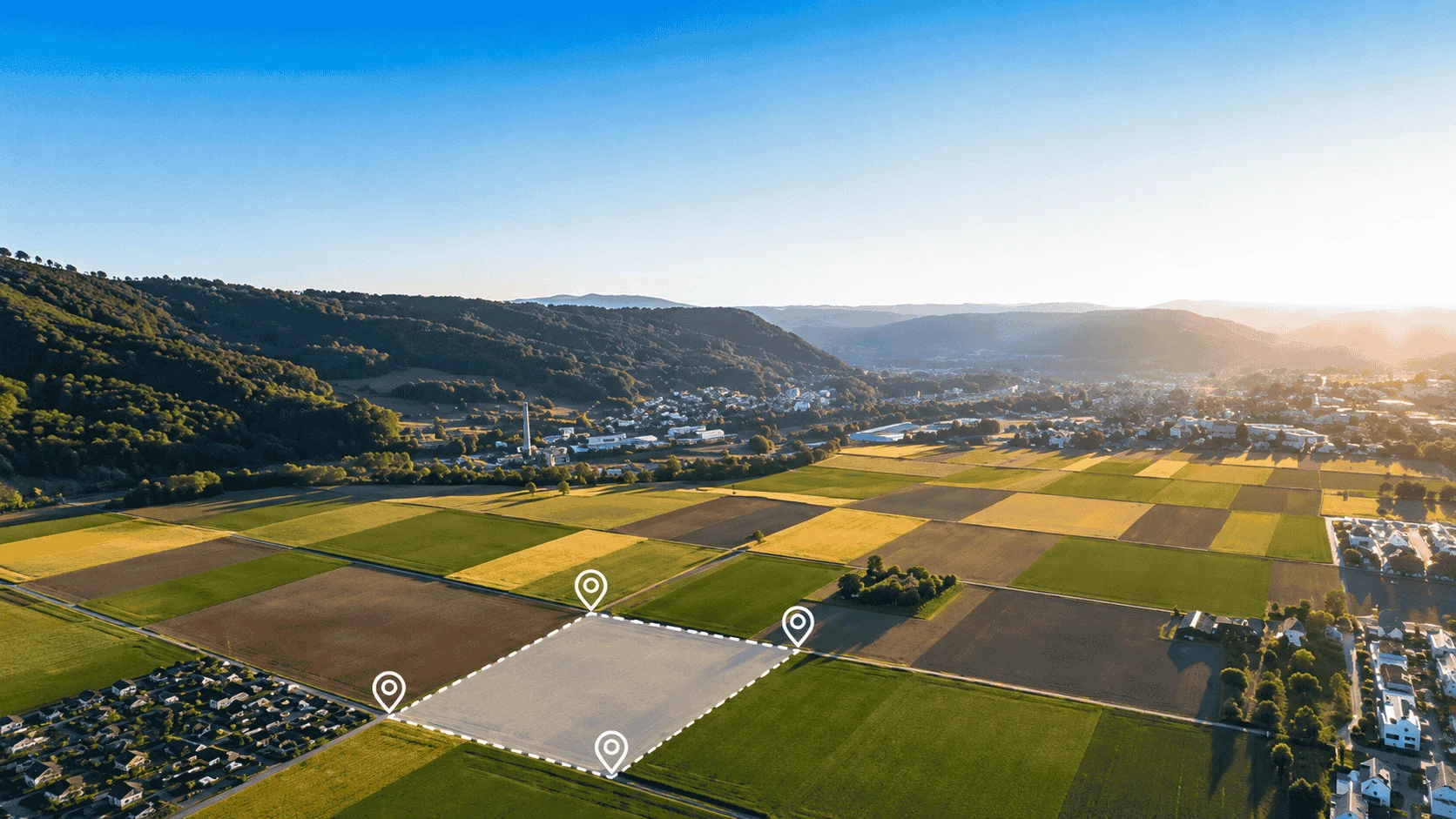
Buying land in Nepal comes down to one thing: getting a clean Lalpurja in your name at the District Land Revenue Office. Everything else, the search, the price talk, the paperwork, exists to get you safely to that moment.
Here is the short version. You find a plot and verify the ownership and papers at the Malpot office. You agree a price and sign a preliminary deposit agreement, then clear taxes. Finally, both parties register the sale deed, and the office issues a fresh Lalpurja to you. When that new certificate lists your name, you are the legal owner.
This guide walks through each step in plain terms, with the documents, fees, and traps that catch buyers in Nepal.
8 steps to buy land in Nepal
- Set your budget and pick your area.
- Search for plots and shortlist.
- Verify the land at the Malpot and Survey offices.
- Do a physical site visit and check boundaries.
- Negotiate the price and sign a Bainapatra (deposit agreement).
- Get tax clearance and arrange financing if needed.
- Register the sale at the Land Revenue Office and pay fees.
- Collect the new Lalpurja and update the tax records in your name.
Most of your risk sits in steps 3 and 4. Spend your time there.
Step 1: Set your budget and decide where to buy
Before you look at a single plot, get honest about numbers. Land in Kathmandu Valley is sold by aana. Land in the hills and outside the valley is often sold by ropani. In the Terai, people use bigha, kattha, and dhur. If those units feel slippery, our land measurement guide breaks down the conversions.
Your total cost is more than the sticker price. Budget for registration fees, capital gains tax if the seller pushes it onto you, boundary walls, road access work, and legal help. A rough planning habit: set aside an extra 5 to 8 percent of the plot value for fees and closing costs, then confirm the real figures with the local office.
Location decides everything about value. Ask a few plain questions. Is there motorable road access to the plot? How wide is the road, and is it a public road or a private track? What is the land classified as on its Lalpurja, residential (abadi), paddy (khet), or dry field (bari)? Is the area inside a municipality with services, or still rural? For price context across the valley, see our Kathmandu land price guide.
Step 2: Search and shortlist plots
You can find land through property portals, local agents, and word of mouth in the neighborhood you want. Each channel has trade-offs. Portals let you compare fast. Local dalals know plots that never get listed, but their loyalty is to the sale, not to you.
Shortlist three or four plots rather than falling for the first one. Note the kitta number, the asking rate per aana or ropani, the road width, and who is selling. If an agent is involved, ask early how the commission works and who pays it.
Be cautious with any deal that feels rushed. “Another buyer is coming tomorrow” is the oldest pressure line in the book.
Step 3: Verify the land before you pay anything
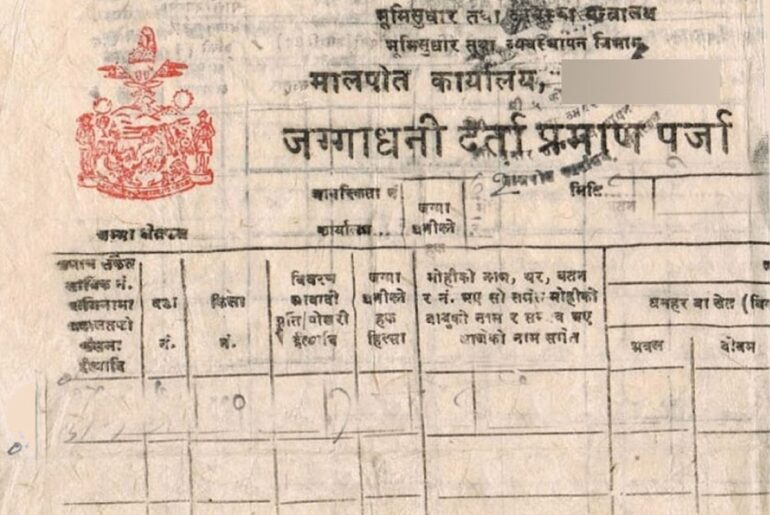
This is the step that protects your money. In Nepal, ownership is proven by the Lalpurja, the land ownership certificate issued by the District Land Revenue Office. Never trust a photocopy handed to you by the seller. Verify at the source.
Here is what a proper check involves.
Confirm ownership at the Malpot. Take the kitta number to the District Land Revenue Office for the area where the land sits. Ask staff to match the current ownership record in their register against the Lalpurja the seller showed you. The name, kitta number, ward, and area must line up exactly.
Run an encumbrance search. Ask whether any loan, mortgage (dhito), court order, or roka (freeze) is registered against the parcel. A clean-looking Lalpurja can still hide a bank loan. The encumbrance search is your only real protection here. Our due diligence guide covers this in more depth.
Cross-check the map at the Survey Office. Compare the Lalpurja against the Survey Department field book (napi naksha). This confirms the boundaries and the true area. Plots sometimes measure smaller on the ground than on paper.
Check the tax status. Confirm all land taxes are paid up to date at the local municipality or ward.
Watch for joint ownership. If the Lalpurja names more than one owner, common in family-inherited land, every named owner must consent to the sale. One missing signature can void the whole deal. Our Lalpurja guide explains individual versus joint certificates.
If anything does not match, walk away or get a lawyer involved before you spend another rupee.
Step 4: Visit the site and check the boundaries
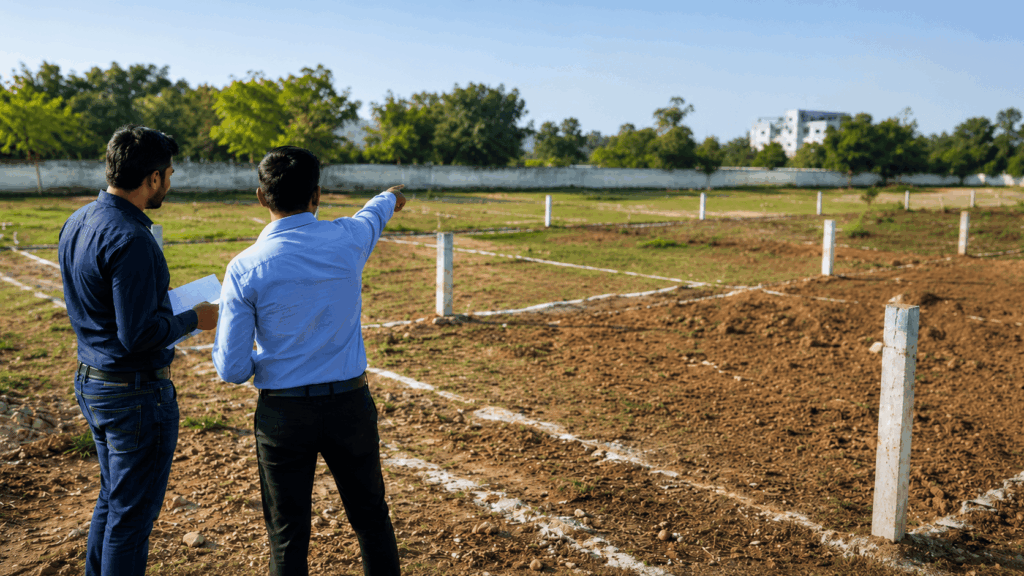
Papers can be clean while the ground tells a different story. Go to the plot in person. Ideally, go with the seller and a surveyor (amin) who can point out the actual corner markers.
Check these on the ground:
- The boundaries match the map, and the neighbors agree on where the lines fall.
- There is real, legal road access, not just a neighbor letting people cross their land out of courtesy.
- The plot is not low-lying land that floods in monsoon.
- There are no power lines, rivers, or public trails cutting through in ways the map did not show.
- If you plan to build, ask the ward whether a Ghar Bato Sifaris (road access certificate) is available for the plot, since you will need it later for a building permit.
Boundary disputes with neighbors are one of the most common headaches in Nepali land deals. An hour with a surveyor now saves years of arguments later.
Step 5: Negotiate and sign the Bainapatra
Once you trust the land, talk price. Base your offer on recent sales of similar plots nearby, not on the seller’s hope. Road width, corner plots, and south-facing orientation all move the price in the valley.
When you agree, you usually sign a Bainapatra, a preliminary sale agreement, and pay a deposit. Put everything in writing. A good Bainapatra states the full price, the deposit paid, the balance and when it is due, the exact plot and kitta number, and what happens if either side backs out. Keep the deposit reasonable and get a signed receipt.
Try to release large sums only through bank transfer, not cash, so there is a clear paper trail. If the seller cannot attend registration in person, insist that a valid, notarized Power of Attorney (mukhtiyarnama) is arranged in advance. An expired or revoked Power of Attorney makes a transaction legally void.
Step 6: Arrange Financing and Tax Clearance
If you are buying with a home or land loan, involve the bank early. The bank will value the land, decide how much it will lend, and register its own claim (dhito) against the plot. That adds time, so line it up before your registration date.
Separately, the seller needs to obtain a tax clearance certificate from the municipality or ward, confirming no land taxes are outstanding. Ask for this at least a week before registration. Missing tax clearance is a frequent cause of last-minute delays.
Step 7: Register the sale at the Land Revenue Office
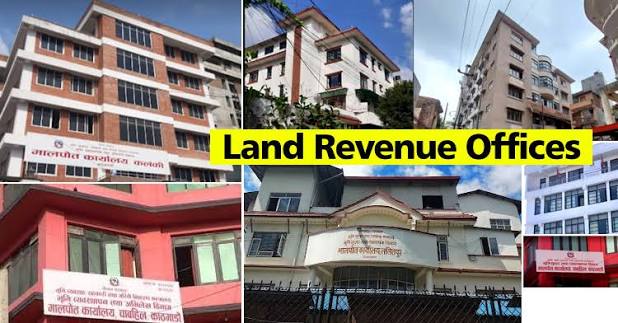
Registration is the legal heart of the purchase. Until the transfer is recorded at the Malpot, no sale is recognized, and you have no protection over land you paid for.
Both buyer and seller (or their authorized representatives) go to the District Land Revenue Office together. Bring the originals.
Documents both parties typically need:
| Document | Who provides it |
|---|---|
| Original Lalpurja (title deed) | Seller |
| Citizenship certificate (original and copy) | Both |
| Land parcel map / field book (napi naksha) | Seller |
| Tax clearance certificate | Seller |
| PAN card (for higher-value transactions) | Both |
| Bainapatra (deposit agreement), if signed | Both |
| Passport-size photos and revenue stamps | Both |
| Notarized Power of Attorney, if a party is absent | As needed |
The office verifies the documents, values the land for fee purposes, and prepares the transfer deed (rajinama). Both parties sign in front of the staff. You pay the fees, get receipts, and the office issues a new Lalpurja in your name. In a clean case with papers ready, this can finish in a single day. In practice, allow a few working days for queues and checks. Our full property registration guide walks through the office steps.
How much does it cost to register land in Nepal?
Registration fees are charged on the government-assessed value of the land (malpot mulyankan), which is usually lower than the price you actually pay. The fee is set by local governments under the Local Government Operation Act, so it varies by municipality, and it can change in the annual budget.
As a general guide for 2026, the registration fee runs roughly 4 to 6 percent of the assessed value. Rates differ slightly across metropolitan, sub-metropolitan, municipal, and rural areas. Two points worth knowing:
- Women buyers get a concession. Registering land in a woman’s name attracts a discount on the registration fee, commonly cited around 25 percent in urban areas and higher in rural municipalities. Exact figures vary by local level, so confirm at your Malpot.
- Kathmandu Valley has an extra surcharge. Properties inside Kathmandu, Lalitpur, and Bhaktapur carry an additional Bagmati Savyata Kosh charge on top of the standard fee .
Because these numbers move, treat any figure you read online as a starting estimate. Call or visit the Land Revenue Office for the plot’s district and get the current rate before you budget. Capital gains tax is normally the seller’s responsibility. In practice it often becomes part of the negotiation, so read our capital gains tax guide to know who pays what.
Step 8: After registration, update the records
Getting the new Lalpurja is not quite the finish line. Do two more things.
First, make sure the land tax (malpot) records are updated to your name at the municipality, so future tax receipts come to you. Second, store the Lalpurja somewhere safe and keep several photocopies. It is your single most important proof of ownership. Nepal is moving toward digital land records, but the physical certificate still runs the show.
Common mistakes buyers make
A few patterns repeat over and over.
- Paying a deposit before verifying ownership at the Malpot.
- Trusting a photocopy of the Lalpurja instead of checking the register in person.
- Skipping the encumbrance search and inheriting a loan or a court freeze.
- Not confirming legal road access, then being unable to get a building permit.
- Ignoring joint owners and missing a required signature.
- Handing over large sums in cash with no bank trail.
Every one of these is avoidable with patience and a visit to the right government office.
Frequently asked questions
Can foreigners buy land in Nepal?
As a rule, foreign individuals cannot buy land in Nepal in their own name. Non-Resident Nepalis have limited rights under specific rules, and companies with foreign investment follow separate provisions. If you hold foreign citizenship, get legal advice before proceeding, because the rules are narrow and change over time.
How long does it take to buy land in Nepal?
The registration itself can be a single day if papers are ready. The whole journey, from agreeing on a plot to holding the new Lalpurja, more often takes a few weeks once you add verification, tax clearance, and any loan processing.
What is a Bainapatra?
It is the preliminary sale agreement you sign when paying a deposit. It records the price, the deposit, the balance and its due date, the plot details, and what happens if either party walks away. Always sign one in writing rather than relying on a verbal promise.
Do I need a lawyer to buy land in Nepal?
It is not legally required, but it is smart, especially for higher-value plots, joint-ownership land, inherited property, or any deal involving a Power of Attorney. A lawyer’s fee is small next to the cost of a bad title.
How do I check if land has a loan or court case against it?
Ask the District Land Revenue Office for an encumbrance search on the kitta number. This reveals registered loans, mortgages, and any roka (freeze). Also cross-check the map and boundaries at the Survey Office.
Is registering land in a woman’s name really cheaper?
Yes, Nepal offers a concession on the registration fee when land is registered in a woman’s name, with the exact discount set by the local level. Many families use this to lower costs, but confirm the current rate at your Malpot office.
Ready to start your search?
Buying land in Nepal rewards patience. Verify before you pay, put every agreement in writing, and lean on the government offices that exist to protect you. Do that, and the new Lalpurja in your name will be clean.
When you are ready to look, browse verified land listings on Basobaas, or post your requirement and let sellers come to you.
Fees and rules change with the annual budget and by municipality, so confirm current figures with your local Land Revenue Office before any transaction.