Quick Answer: The Nepal Land Revenue Act Amendment 2026 transfers land registration, ownership transfer, and property freeze powers from district Malpot offices to local governments (Palikas). It also renames the Malpot Karyalaya to Bhumi Prashasan Karyalaya. For most property owners, this means routine land transactions can now be handled at your nearest municipality office.
Think about the last time someone in your family had to deal with a land transfer. Maybe your father sold a small plot. Maybe you inherited property from a grandparent. If you’ve been through it, you already know the story: the pre-dawn start, the dusty road to the district headquarters, the queue that stretched out the door, and the middleman who materialized out of nowhere and offered to “”help”—for a fee, of course.
That experience has barely changed since Nepal’s Land Revenue Act was written in 1977. Until now, perhaps.
The Nepal Land Revenue Act Amendment 2026 is a genuine attempt to fix this. Published through an ordinance in the Nepal Gazette, it pushes core land administration functions — registration, ownership transfer, property freeze and release — down to the local government level. Whether you’re buying land, settling an inheritance, or trying to lift a bank freeze on your property, the relevant office may soon be a short drive from your home rather than hours away at the district headquarters.
But “make it law” and “make it work” are two different things in Nepal. Let’s go through what this amendment actually says, what it means if you own property, and where the real risks lie.
Why the Old System Was So Broken
Nepal has had 753 local governments since the federal constitution was adopted in 2015. And yet, for nearly a decade after federalism arrived, land administration — registration, ownership transfer, property freeze, all of it — stayed locked at the district level. In offices that, frankly, hadn’t changed much since the Panchayat era.
For people living close to a district headquarters, this was inconvenient. For farmers and families in remote wards, it was genuinely punishing. Consider a municipality in Baglung or Humla where the district headquarters is three or four hours away over rough mountain roads. Selling a small plot of land to pay for your child’s education doesn’t just mean a morning errand. It means a full lost day, transport costs, and often money handed to a dalal — a middleman who knows the staff and can move paperwork faster than the official queue.
Nepal ranks 110th out of 180 countries on Transparency International’s Corruption Perceptions Index. Malpot offices weren’t just an inconvenience — they were one of the most widely cited hotspots for petty corruption in the country. The dalal system wasn’t a quirk; it was baked into how things got done.
The Local Government Operation Act had already given municipalities theoretical authority over land administration functions. But “theoretical” is doing a lot of work in that sentence. District offices resisted. Implementation stalled. Citizens kept making the long journey. The 2026 amendment is supposed to finally break that deadlock — and this time, there’s a specific legal provision behind it.
What the Nepal Land Revenue Act Amendment 2026 Actually Changes
The core of the amendment is a new Section 8(Ga) in the Land Revenue Act. In plain terms, here is what changes.
Land Transfer and Registration (Jagga Pass) — Now at Your Local Palika
Buying or selling land in Nepal requires an official registration of the transaction — what’s commonly called jagga pass. Under the old law, that had to happen at the district Malpot office. Under this amendment, it can happen at your local municipality’s Land Management Branch (Bhumi Vyavasthapan Shakha).
The same applies to Namasari (transferring ownership through inheritance or a gift) and Dakhil Kharij (updating ownership records after a transfer is done). All three processes move to the local level.
Property Freeze and Release (Rokka and Phukuwa)
When you take a bank loan using land as collateral, the lender requests a freeze (Rokka) on that property. When you repay, they request the release (Phukuwa). Both processes now happen at the local government level. For small borrowers dealing with cooperatives and microfinance institutions — and that describes a large share of rural Nepal — the entire lending cycle can now stay within the local municipality’s jurisdiction.
Survey Map Updates
If a land transaction requires a survey map update, the local government’s Land Management Branch can now write directly to the Survey Office to request it. One less layer of routing — and on paper, a faster process.
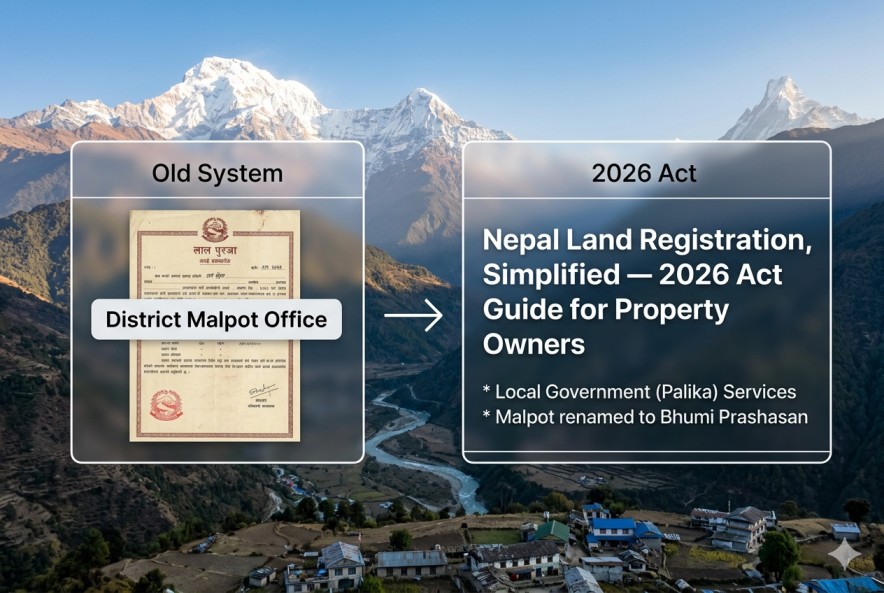
The Rename: Malpot Karyalaya Becomes Bhumi Prashasan Karyalaya
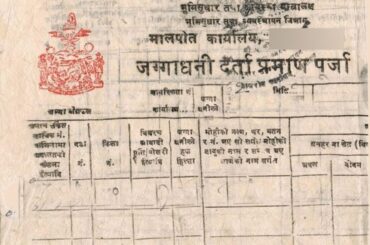
The amendment renames every Land Revenue Office (Malpot Karyalaya) to Land Administration Office (Bhumi Prashasan Karyalaya) across both the Land Revenue Act and the Land (Survey and Measurement) Act. The officer title changes too — from Malpot Adhikrit to Bhumi Prashasan Adhikrit.
The word “Malpot” has roots in old Nepali land-tax vocabulary. It’s literally about revenue extraction. The new name signals a shift: these offices are service providers now, not tax-collection machinery. Whether the culture inside them actually changes is another question. But the rebranding carries a message.
What This Means If You Own Property in Nepal
Let’s make this concrete with two examples.
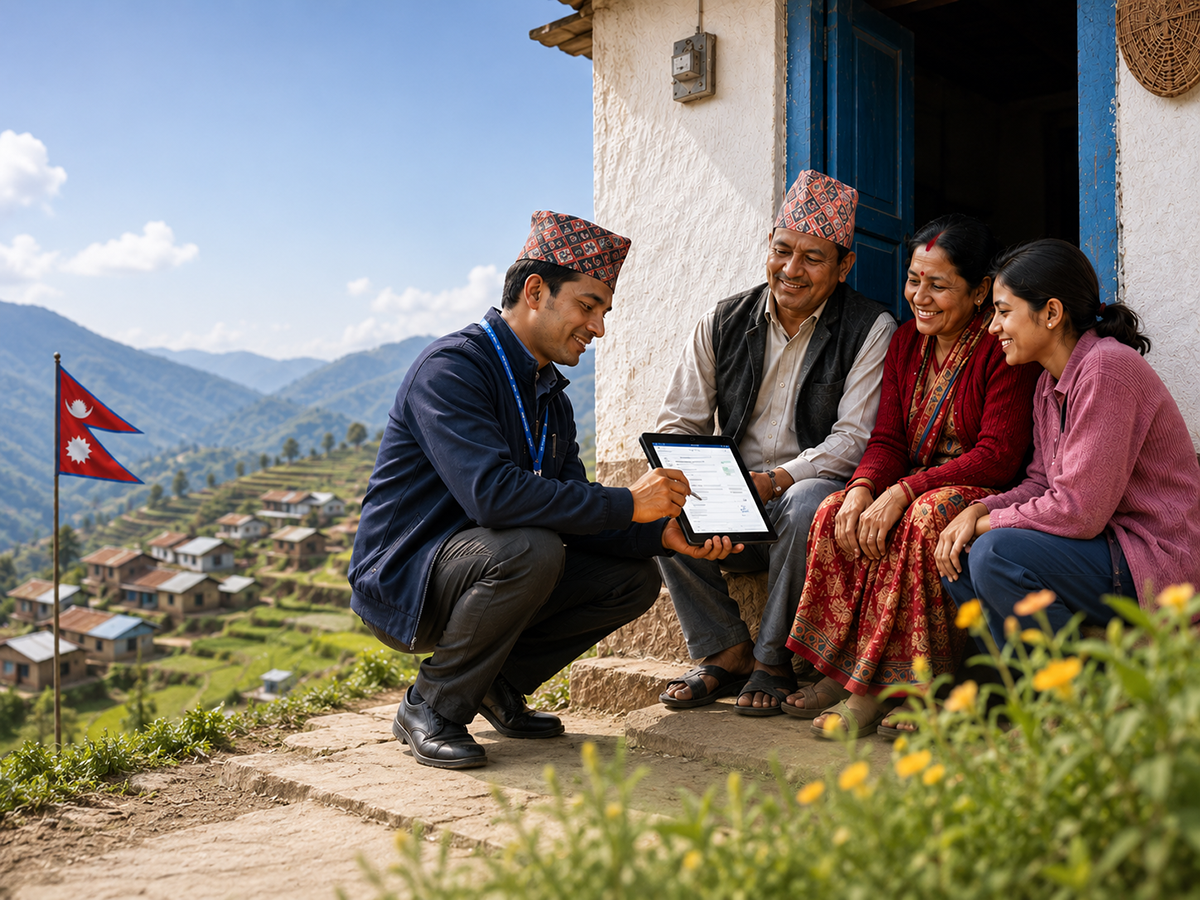
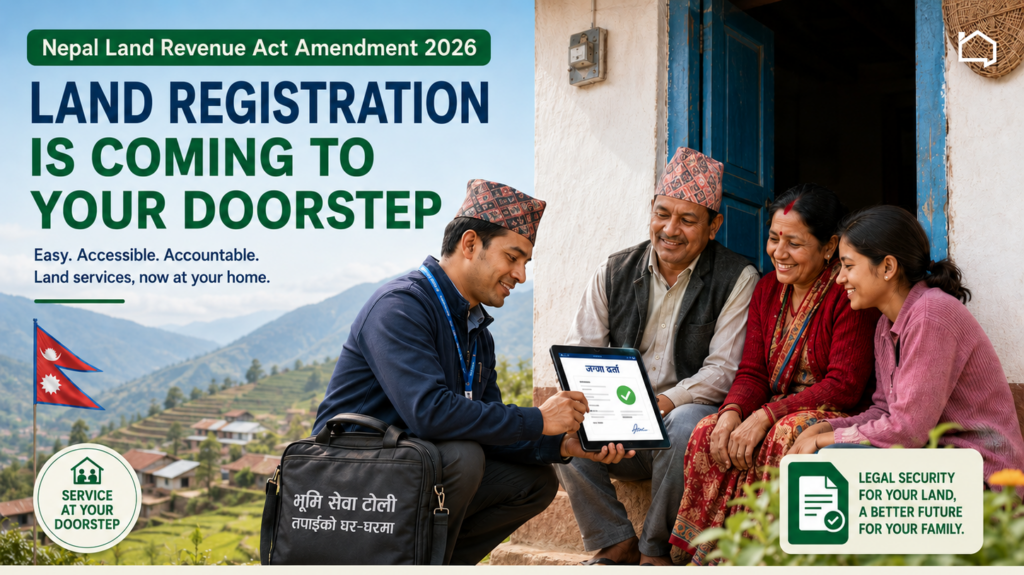
Ram Bahadur, a farmer in a remote ward of Baglung, wants to sell part of his land to fund his daughter’s schooling. Before this amendment: three to four hours of travel to the district headquarters, a queue, a dalal, and a full wasted workday. After this amendment: a short trip to his local municipality’s Land Management Branch, no middleman, official fees only.
Sita Gurung takes a small loan from her local cooperative with land as collateral. Six months later she repays it. Getting the freeze lifted used to mean the cooperative’s paperwork traveling to the district Malpot office and sitting in a queue for days. Under the amendment, the cooperative deals directly with the local Land Management Branch. The release is faster. Sita’s time and money stay where they belong.
There’s also a financial angle for Palikas themselves. When land registration fees are collected locally, more of that money flows directly into local government budgets — funds that municipalities can deploy for development. The Local Governance Act, 2073 already authorized municipalities to collect property taxes. This amendment deepens that integration.
The Oversight Mechanism: Who Keeps Local Offices Accountable?
The amendment doesn’t just hand power to local governments and walk away. A new Section 32(Kha) gives the Director General of the Department of Land Management and Records the authority to review — and if necessary nullify — any land registration or ownership transfer that a local government’s Land Management Branch has approved. If a complaint is filed about a serious legal error, the Director General can investigate and cancel the decision before the case even reaches a court.
It’s a two-layer model: local execution, federal oversight. Push services to the grassroots, but keep accountability at a higher level. In theory, that’s the right design. Whether it actually works depends on whether the Director General’s office is adequately staffed, politically independent, and accessible to ordinary citizens with complaints — none of which is guaranteed.
The Real Risks: Where This Reform Could Fail
There’s no shortage of things that could go wrong. Here are the ones worth watching most closely.
Capacity Gaps at Local Municipalities
Land registration is technically demanding. It requires knowledge of property law, deed drafting, cadastral mapping, and digital record management. Most rural municipalities simply don’t have this expertise on staff yet. Nepal has a national land records platform called LRIMS (Land Records Information Management System), but many local governments don’t have it installed, configured, or staffed with trained users. Asking untrained staff to handle complex property transactions is a recipe for errors that could haunt property owners for years.
Corruption Can Move Closer Without Disappearing
Here’s a counter-intuitive risk: local-level corruption can be harder to fight than district-level corruption. Social ties, political pressure, and personal relationships are more intense in small municipalities. A powerful local figure who wants a questionable land transaction approved faces fewer institutional barriers at a small local office than at a larger district headquarters. If the Director General’s oversight is slow, under-resourced, or politically compromised, the reform shifts the hotspot without eliminating it.
Duplicate Records and Property Disputes
Nepal already has far too many land disputes. Without a real-time, interconnected digital system, local transactions risk creating conflicting entries — a municipality showing a new owner while the district database still shows the original one. That inconsistency doesn’t just cause confusion. It can trigger litigation that drags on for years, consuming the time and money this reform was meant to save.
Bureaucratic Resistance From District Offices
District Malpot staff aren’t going to welcome a reform that reduces their relevance. Bureaucratic resistance to decentralization is a documented pattern in Nepal’s governance history. Even with this law in place, district offices may drag their feet — withholding records, creating procedural obstacles, or being slow to cooperate with local Land Management Branches. Overcoming this will take sustained political will at a level that hasn’t always been consistent.
What Needs to Happen for This Reform to Actually Work
The amendment is a starting line, not a finish line. Five things need to happen in parallel for it to deliver on its promise.
1. Proper training for local Land Management Branch staff — covering property law, deed preparation, and LRIMS software. Not a one-day workshop. Structured, ongoing training with accountability.
2. Real-time digital integration — every local transaction must automatically sync with district and national records. Without this, duplicate and conflicting ownership data is almost inevitable.
3. A public awareness campaign — citizens in every ward need to know their rights have changed. Without awareness, dalals will keep selling “help” to people who don’t know they no longer need it.
4. A phased rollout — start with municipalities that already have functional Land Management Branches and trained staff, then expand based on what actually works on the ground.
5. Proper resourcing of the Director General’s oversight function — not just legal authority on paper, but actual staff, accessible complaint mechanisms, and genuine political independence.
A Genuine Step Forward — With a Long Road Ahead
The Nepal Land Revenue Act Amendment 2026 is real, and it matters. After nearly a decade of federal governance without a matching shift in land administration, the government has finally moved. Land registration, ownership transfer, and property freeze procedures are, by law, now within reach of local governments. The Malpot office has a new name and a new mandate. Oversight is built in.
For ordinary Nepalis — the farmer selling a plot, the family settling an inheritance, the borrower trying to clear a loan freeze — this holds genuine promise. Less travel, lower costs, fewer middlemen.
But Nepal has a history of progressive laws that stalled at implementation. Not because the laws were wrong, but because the institutional infrastructure wasn’t ready. The 2026 amendment faces the same risk. The test isn’t passing the ordinance — it’s training the staff, deploying the technology, educating the public, and keeping the oversight honest. Do that, and this becomes the moment Nepal’s land administration truly went federal. Fall short, and it joins a long list of laws that looked good on paper.
If you own land in Nepal, or are planning to buy or sell property in the near future, it’s worth checking what your local municipality’s Land Management Branch currently offers. The services that once required a full day’s journey may already be available a few kilometers from home.
Frequently Asked Questions
What is the Nepal Land Revenue Act Amendment 2026?
The Nepal Land Revenue Act Amendment 2026 — formally called Kehi Nepal Ainlai Sanshodhan Garna Banaeko Adesh, 2083 — is an ordinance published in the Nepal Gazette that transfers core land administration functions from district Malpot offices to local governments (Palikas). These functions include land registration (jagga pass), ownership transfer (Namasari, Dakhil Kharij), and property freeze and release (Rokka and Phukuwa). It also renames Malpot Karyalaya to Bhumi Prashasan Karyalaya.
What is the difference between Malpot Karyalaya and Bhumi Prashasan Karyalaya?
Bhumi Prashasan Karyalaya (Land Administration Office) is the new name for what was previously the Malpot Karyalaya (Land Revenue Office). The name change signals a shift in purpose — from revenue collection to public service delivery. The officer title also changes from Malpot Adhikrit to Bhumi Prashasan Adhikrit.
Can I register land at my local municipality in Nepal after this amendment?
Yes. Under the 2026 amendment, local governments with a Land Management Branch (Bhumi Vyavasthapan Shakha) are legally authorized to handle jagga pass (land sale registration), Namasari, Dakhil Kharij, and Rokka/Phukuwa. However, actual service availability depends on your municipality’s readiness — check with your local Palika office to confirm what is currently offered in your area.
What does the Malpot office rename mean for property buyers and sellers?
The rename from Malpot Karyalaya to Bhumi Prashasan Karyalaya is primarily symbolic, but it reflects a real policy shift. For property buyers and sellers, the more important change is the transfer of transaction powers to local government level — meaning fewer long trips to district offices for routine land transfers, lower costs, and reduced dependence on middlemen.
Is there federal oversight of local land registration under the new law?
Yes. Section 32(Kha) of the amendment gives the Director General of the Department of Land Management and Records authority to review and cancel any local-level land registration or ownership transfer that involves a serious legal error — before the matter reaches a court. This federal oversight layer is intended to prevent abuse of the newly delegated powers.
What are the risks of Nepal’s 2026 Land Revenue Act Amendment?
The main risks are capacity gaps at rural municipalities lacking trained staff or LRIMS software; corruption potentially shifting to the local level rather than being eliminated; conflicting land records if digital systems are not properly integrated; and bureaucratic resistance from district offices losing authority. Successful implementation requires sustained investment in staff training, technology deployment, public awareness, and a well-resourced oversight mechanism.