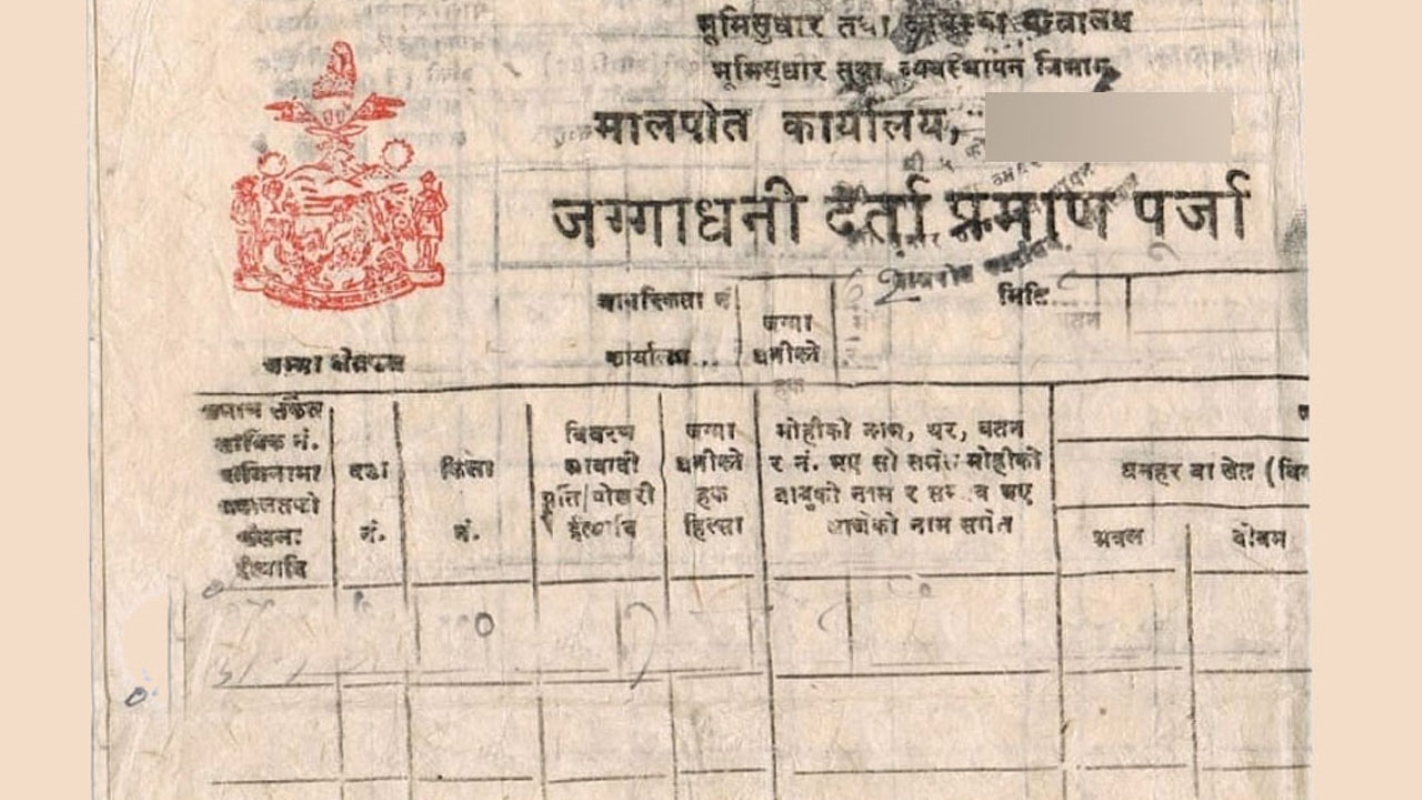
In Nepal’s property market, one word separates legitimate ownership from disaster: Lalpurja. This small, often faded document—Nepal’s official land ownership certificate—is the foundation of every property transaction in the country. Buy property without properly verifying the Lalpurja, and you risk losing everything you paid. Understand it fully, and you have the most powerful tool in your due diligence arsenal. This guide explains exactly what the Lalpurja is, what information it contains, how to verify its authenticity, and the fraud schemes you must know about.
What is the Lalpurja?
Lalpurja (लालपुर्जा) is the common name for Nepal’s land ownership certificate, formally known as the “Field Book” or “Datta/Certificate of Ownership.” It is issued by the District Land Revenue Office and constitutes the official government record of who owns a specific parcel of land. The name comes from the traditional red (lal) colour of the document. Without a valid Lalpurja, there is no legally recognised property ownership in Nepal.
Types of Lalpurja
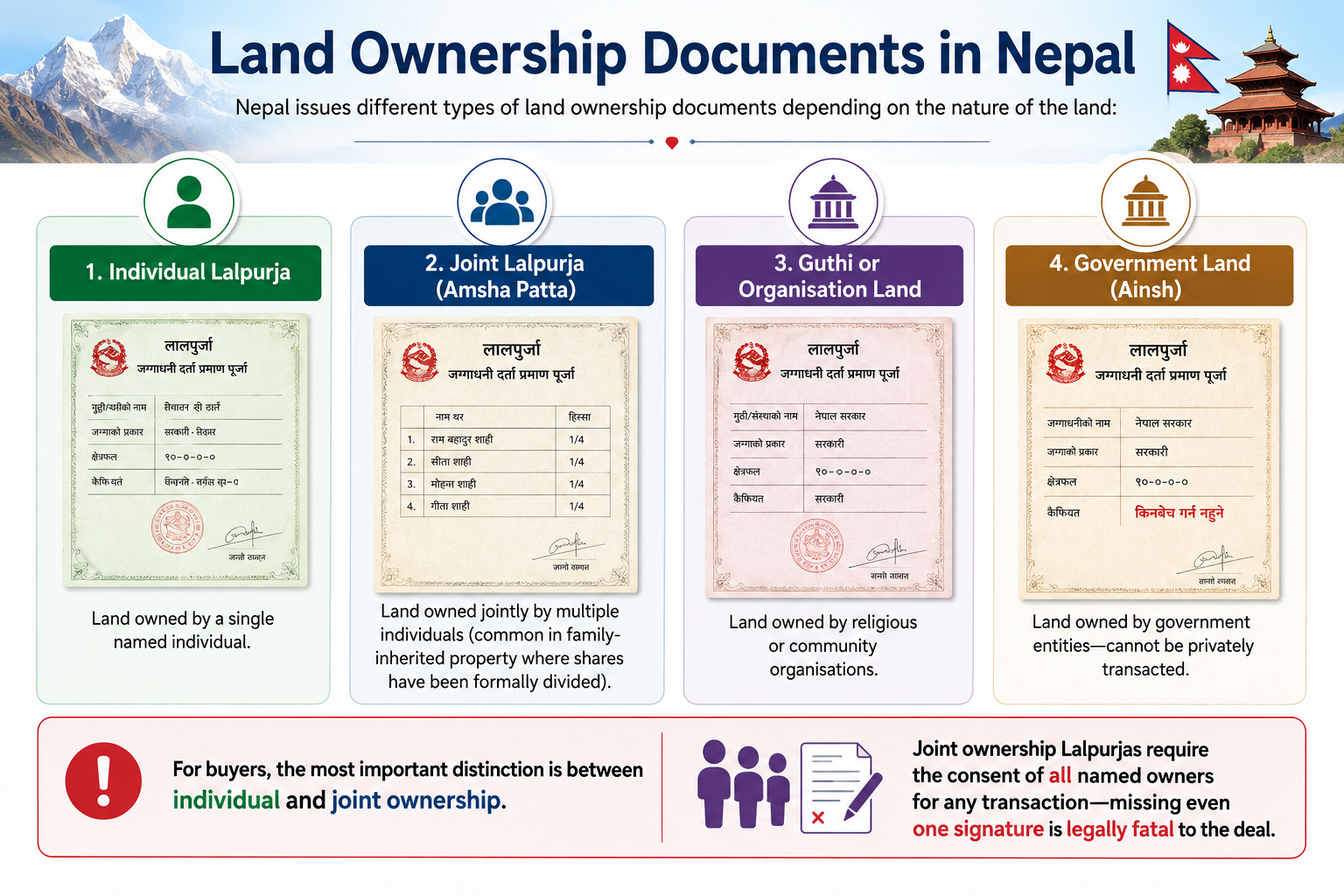
Nepal issues different types of land ownership documents depending on the nature of the land:
- Individual Lalpurja: Land owned by a single named individual
- Joint Lalpurja (Amsha Patta): Land owned jointly by multiple individuals (common in family-inherited property where shares have been formally divided)
- Guthi or Organisation Land: Land owned by religious or community organisations
- Government Land (Ainsh): Land owned by government entities—cannot be privately transacted
For buyers, the most important distinction is between individual and joint ownership. Joint ownership Lalpurjas require the consent of all named owners for any transaction—missing even one signature is legally fatal to the deal.
Key Information on a Lalpurja
A standard Lalpurja contains: the owner’s full name and citizenship number; the Kitta number (unique parcel identifier); the district, VDC/municipality, and ward number; the land area in ropani-aana-paisa-daam (hill regions) or bigha-kattha-dhur (Terai); the land classification (Abadi for residential, Khet for rice paddy, Bari for dry field, etc.); and the date of last registration/transfer.
How to Verify Lalpurja Authenticity
Never rely solely on a photocopy. Verification must involve:
- Visit the Land Revenue Office: Go to the District Land Revenue Office for the area where the property is located. Present the Kitta number and ask staff to verify the current ownership record against their register.
- Check for Encumbrances: Request an encumbrance search to confirm no loans, mortgages, court orders, or restrictions are registered against the parcel.
- Cross-reference with Survey Department: Compare the Lalpurja details against the Survey Department’s field book to confirm boundaries and area.
- Confirm Tax Status: Verify all land taxes are current with the municipality.
Common Lalpurja Fraud Schemes in Nepal
Forged Lalpurjas: Fake documents are produced with altered names or kitta numbers. Always verify in person at the Land Revenue Office—never trust documents presented in isolation.
Selling Land Under Loan: The seller presents a clean Lalpurja but a loan is registered against the property. An encumbrance search is the only protection.
Duplicate Sales: Dishonest sellers attempt to sell the same property to multiple buyers. The first to complete registration legally owns the property—race-to-register schemes have victimised buyers.
Expired Power of Attorney: A transaction conducted under a Power of Attorney that has expired or been revoked is legally void.
How to Transfer Lalpurja
When a property sale is completed and registered at the Land Revenue Office, the existing Lalpurja is surrendered and a new one is issued in the buyer’s name. This process is the central act of Nepal’s property registration system. The new Lalpurja, once issued, is your proof of ownership—store it securely. Digital land records are being progressively introduced, but physical Lalpurja verification remains the standard for transactions.
Need help verifying a property’s Lalpurja before purchase? Contact our Basobaas property experts—we assist buyers with full due diligence on every transaction.