The rent-versus-buy debate is one of the most common financial dilemmas facing Nepalis in 2026—particularly young professionals in Kathmandu who are watching property prices climb while their savings grow slowly. The answer is not universal. It depends on your financial situation, lifestyle stage, the specific property market you are in, and your long-term goals. This guide gives you a clear, honest framework to make the right decision for your circumstances.
The Core Question
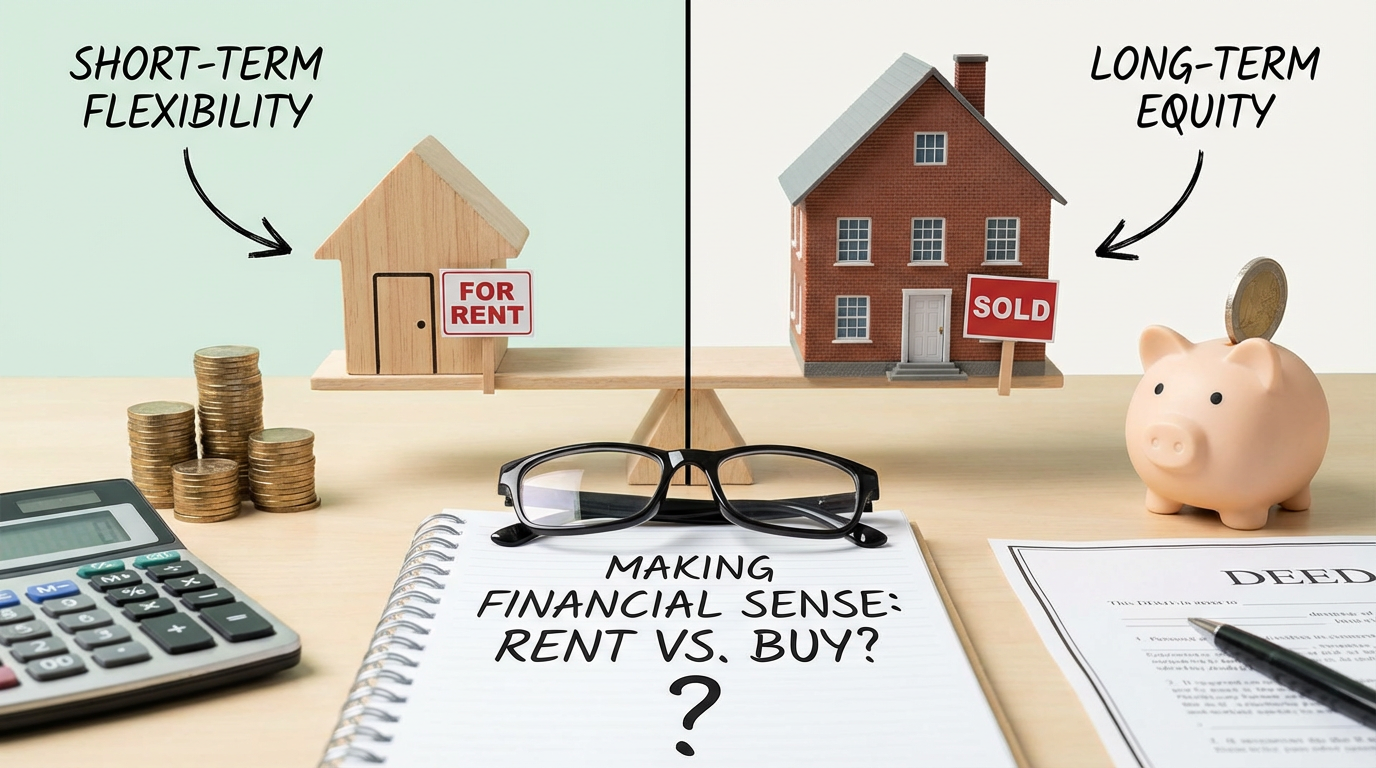
At its heart, the rent-versus-buy decision is about whether the wealth you build through ownership (equity, capital appreciation) outweighs the flexibility and lower upfront cost of renting. In Nepal’s context, this calculation is shaped by several unique factors: the relatively high cost of home loans, the rapid (if uneven) appreciation of Kathmandu Valley property, and the cultural expectation that owning property is a mark of stability and success.
True Cost Comparison
Cost of Renting a 2BHK flat in Kathmandu (Baneshwor area), 2026:
- Monthly rent: NPR 25,000–35,000
- Security deposit: NPR 50,000–70,000 (one-time, refundable)
- Annual cost: NPR 3–4.2 lakh
- No equity built; full flexibility to relocate
Cost of Buying a comparable 2BHK flat in Baneshwor, 2026:
- Purchase price: Approx. NPR 1.2–1.5 crore
- Down payment (35%): NPR 42–52 lakh
- Home loan at 9.5% over 20 years: Monthly EMI approx. NPR 35,000–45,000
- Registration fees + taxes: NPR 6–8 lakh (one-time)
- Maintenance: NPR 3,000–5,000/month
The EMI is higher than rent in the short term—but you are building equity with every payment, and the property value is likely appreciating.
When Renting Wins
Renting makes more financial sense when: you are likely to move cities or countries within 3–5 years; you do not have a down payment without liquidating critical savings or investments; your income is variable and you cannot comfortably service an EMI; property prices in your target area are significantly above fair value; or you can invest your down payment in higher-yielding assets.
When Buying Wins
Buying makes more financial sense when: you plan to stay in the same city for 7+ years; you have a stable income and can service the loan without financial stress; you have at least 35–40% of the property value for a down payment and fees; property prices in your target area have consistent historical appreciation; and rental yields (income from renting it out, if needed) make the numbers work.
Impact of Home Loan Rates in 2026
Nepal’s home loan interest rates in 2026 remain in the 9–11% range—historically moderate but not cheap. At these rates, a NPR 1 crore loan over 20 years costs approximately NPR 1.8 crore in total repayments. This means the property must appreciate significantly to justify the all-in cost of ownership over renting. The good news: central Kathmandu property has historically appreciated at 8–12% per year in rupee terms, which tilts the long-term calculation firmly in favour of ownership for buyers who hold for 10+ years.
2026 Market Context
The current market offers a reasonable entry point for buyers who have been waiting. Property prices have corrected modestly from their 2022–2023 peaks, home loan rates have stabilised, and demand is recovering steadily. For end-users—those buying a home to live in—2026 represents a sensible buying window, particularly in mid-market segments where value is good.
Verdict
If you are financially ready (stable income, adequate down payment, long-term city commitment), buying is the stronger long-term wealth-building move in Nepal’s property market. If any of the readiness criteria are not yet met, renting strategically while building your savings is the smarter short-term play. There is no shame in renting—done intentionally, it is a financially sound strategy.
Ready to run your own numbers? Browse properties for sale on Basobaas or speak to a property advisor.