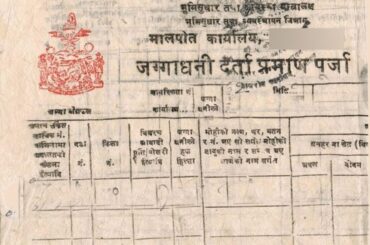
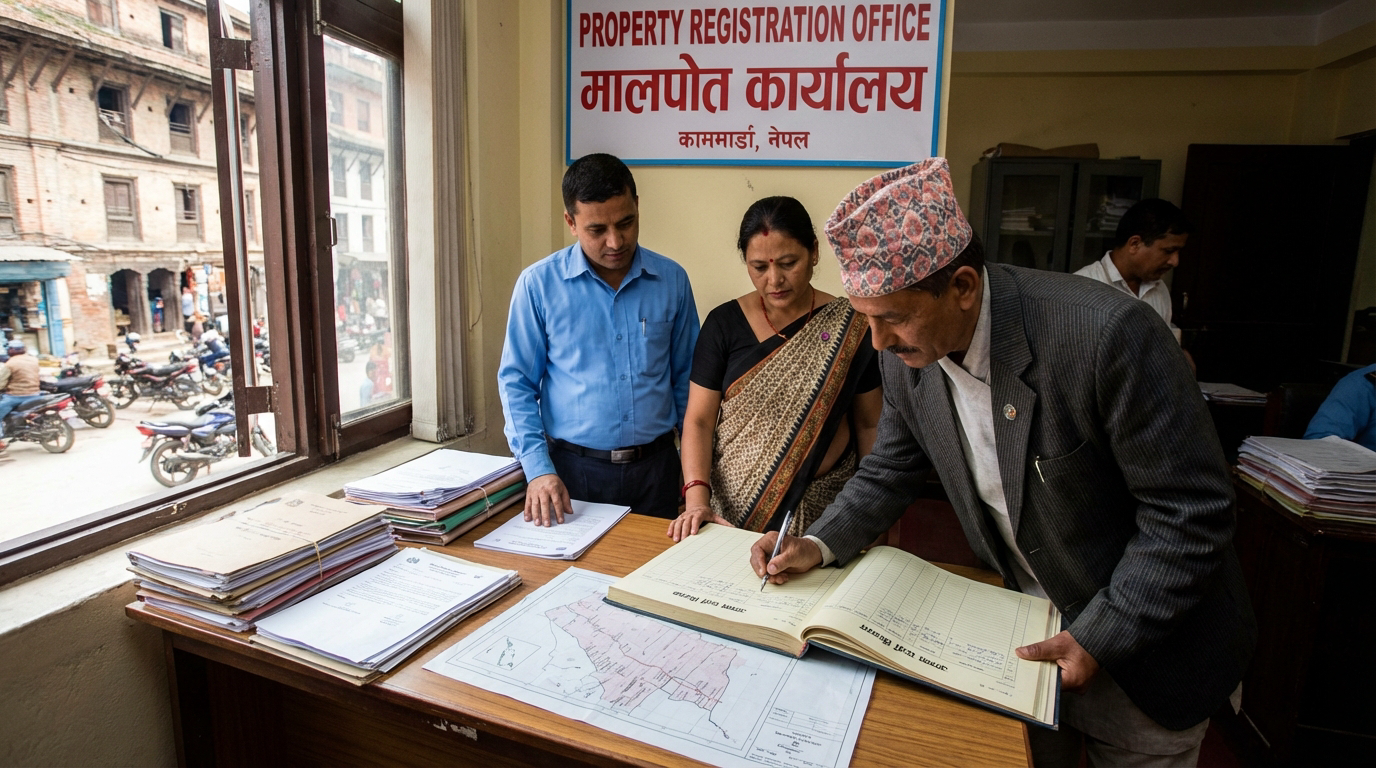
Property registration in Nepal is the legal process by which ownership of land or a building is formally transferred from seller to buyer and recorded in the government’s land records. Without completing this process, no sale is legally recognized—and the buyer has no legal protection over the property they paid for. This guide walks you through every step of Nepal’s property registration process, including the documents you need, the fees you will pay, and how to avoid the most common delays.
Overview of Nepal’s Land Registration System
Property registration in Nepal is governed by the Land (Survey and Measurement) Act and administered by the District Land Revenue Office (Malpot Karyalaya). Each district has its own Land Revenue Office, and all transactions must be registered in the office for the district where the property is located. In Kathmandu Valley, there are multiple offices covering different areas—confirm which office covers your specific property before you begin.
Required Documents for Property Registration
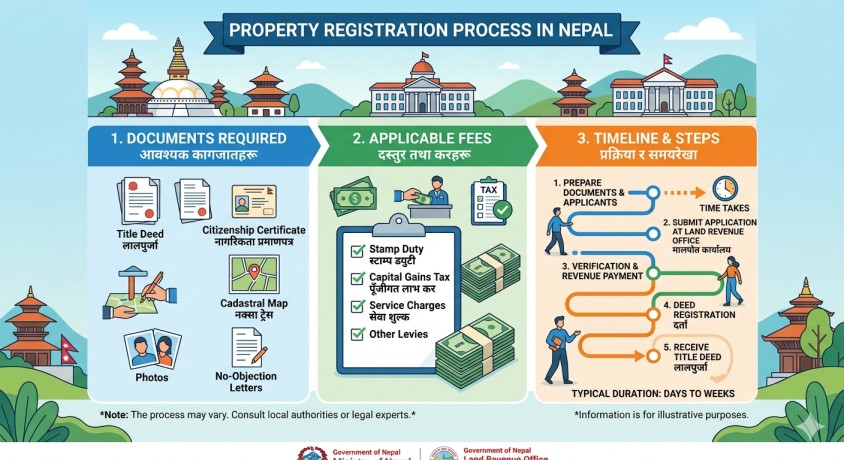
Both buyer and seller must bring the following documents to the Land Revenue Office:
- Lalpurja (Title Deed): The original ownership certificate of the property
- Citizenship Certificate: Original and photocopy for both buyer and seller
- Land Parcel Map (Field Book/Napi Naksha): The official survey map showing the boundaries
- Tax Clearance Certificate: Confirming all land taxes are paid (obtained from local municipality)
- PAN Card: For transactions above a certain value, PAN numbers of both parties are required
- Municipal Building Completion Certificate: Required for registered buildings/houses
- Bainapatra (Preliminary Sale Agreement): If a deposit agreement was signed earlier
- Revenue Stamps
If either party cannot be present in person, a notarised Power of Attorney (Adhikar Patra) must be arranged in advance.
Step-by-Step Registration Process
Step 1 — Obtain Tax Clearance: Visit the local municipality or ward office to get a property tax clearance certificate. This confirms no outstanding land taxes are owed.
Step 2 — Document Verification: Both buyer and seller visit the Land Revenue Office together. Staff will verify all original documents and cross-reference the property details against government records.
Step 3 — Property Valuation: The government values the property for registration fee calculation purposes. Note that the government’s assessed value (Malpot Mulyankan) is usually lower than the actual transaction price. Registration fees are calculated on this government value.
Step 4 — Fee Payment: Pay the applicable registration fees at the office (or designated bank). Get official receipts for all payments.
Step 5 — Deed Execution: The transfer deed (Rajinama) is prepared and signed by both parties in the presence of Land Revenue Office staff.
Step 6 — New Lalpurja Issued: The Land Revenue Office issues a new title deed (Lalpurja) in the buyer’s name. The buyer is now the legal owner of record.
Registration Fees in Nepal (2026)
Property registration fees in Nepal vary based on the government-assessed value and the location of the property. As a general guide:
- Municipal areas: Registration fee is typically 4–6% of the government-assessed value
- Sub-metropolitan and metropolitan areas: Slightly higher rates apply
- Rural/VDC areas: Lower rates apply
- Additional charges include: capital gains tax (if applicable), municipality tax, and revenue stamps
Always confirm the current rate with the relevant Land Revenue Office, as rates are subject to revision in the annual government budget.
Typical Timeline
In straightforward cases with all documents prepared, the registration process at the Land Revenue Office can be completed in a single day. However, allow 2–5 working days in practice due to queuing, document checks, and the time needed for prior steps like obtaining tax clearance certificates. The entire process from agreeing on a sale to completing registration typically takes 3–6 weeks.
Common Delays and How to Avoid Them
- Missing tax clearance: Obtain this from the municipality at least a week before your registration date
- Discrepancy in names: Ensure names on all documents match exactly—even minor spelling differences cause delays
- Joint ownership complications: If the property is owned by multiple parties (common in family-inherited land), all owners must be present or provide Power of Attorney
- Encumbrances: If the property has a bank loan registered against it, the loan must be discharged before registration can proceed
Have questions about the registration process? Visit our FAQ or contact a Basobaas property expert for guidance.